
On this page · 6 sections
On the afternoon of Monday, Nov 2, 1936, a singer named Adèle Dixon stood in a converted room in an old north London entertainment hall and sang a song written for the occasion. It was called "Magic Rays of Light." About 400 people watched her at home, on sets that cost £100 to £150 each, a fortune in 1936.
That broadcast opened the BBC Television Service, the world's first regular "high-definition" TV service. Germany had started a TV service the year before, at 180 lines, but the BBC wanted at least 240 lines, a big jump from the fuzzy 30-line pictures that had been flickering around Britain since the late 1920s.
Today is Monday, Nov 2, 2026. Television, the kind with a schedule, turns 90.
A hill, a mast and two machines that hated each other
The BBC didn't pick Alexandra Palace because it was glamorous. It was a run-down Victorian complex on a hill, and it wasn't the first choice. The engineers wanted their aerial about 600 feet above sea level so the signal would reach 25 miles, but the hill only gave them about half that height, so they built a tower of roughly 300 feet on top of the building to make up the rest.
The bigger problem was inside. Two companies wanted to own British television, and the BBC couldn't decide between them. John Logie Baird's company had a 240-line system that used spinning mechanical parts. Marconi-EMI had a 405-line system that was entirely electronic.
So the BBC ran both. The plan was six months of alternating weeks, one system, then the other, until a winner was obvious. A coin toss decided who went first. Baird won.
Winning the toss was the high point. Baird's machines had spinning parts, and they gave the studio crews constant trouble. Cecil Madden, who planned the early programs, remembered the gap in blunt terms: "It was like playing with clockwork we'd already got electricity."
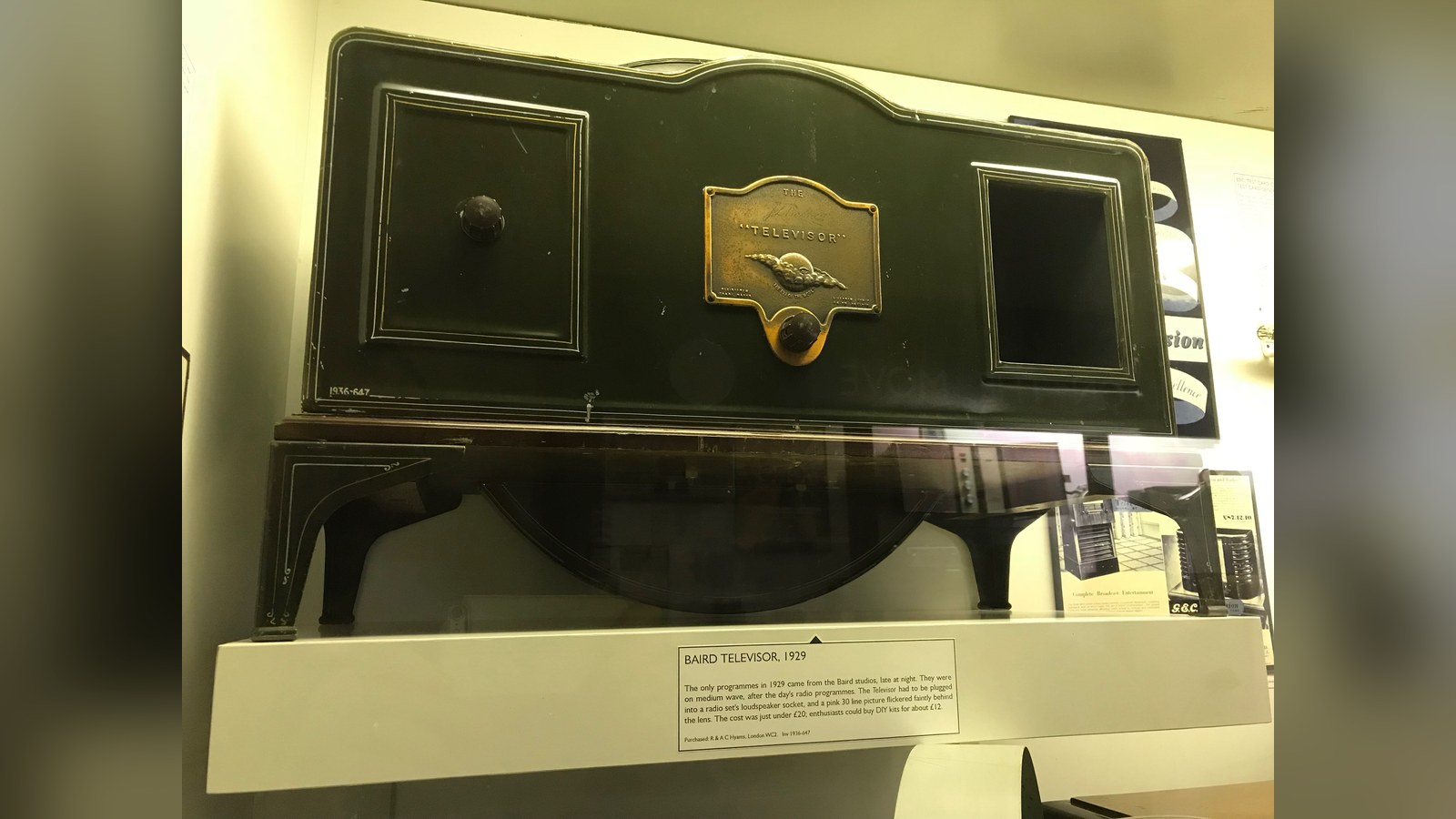 A Baird Televisor from 1929, from the 30-line era before the BBC's 1936 service. Photo: Matt Brown, CC BY 2.0, via Wikimedia Commons.
Opening night, twice
The first day went out like this. An opening ceremony, then a Movietone newsreel, then a variety show with Dixon and the BBC Television Orchestra. Then the station shut down for five hours, came back on the air at 9 p.m. for a magazine show called Picture Page, and signed off for the night at 10.
Because the two systems took turns, the opening ceremony had to be performed twice, once for each. So BBC television's second program was also its first repeat. TV has been showing reruns since its first afternoon.
The daily budget was about £100. One act on that early schedule was a plate-spinning troupe called the Lai Founs. The head of television, Gerald Cock, built breaks into the schedule on purpose, so that viewers' eyes wouldn't get tired. Nobody called them viewers yet. A newspaper competition had settled on "lookers-in."
John Reith, who ran the BBC, didn't care for television at all. He later claimed he didn't watch it. A month after the opening, he admitted he was more impressed than he expected to be.
The clockwork loses
The six-month contest didn't last six months. In early 1937, after about three months, the BBC dropped Baird's system and went all-electronic at 405 lines. Isaac Shoenberg, who led the EMI team, had gambled on a line count far higher than anyone thought practical, and the gamble paid off so well that British TV kept that same 405-line standard for nearly half a century, until the start of 1985.
The coronation of King George VI, on May 12, 1937, was the first big outside broadcast, and London-area stores sold about 9,000 sets around it. By September 1939, there were roughly 20,000.
What it means for you
The big idea from 1936 still works in your living room. A TV station sends pictures through the air, and anyone with an antenna can watch for free. In the US, local broadcast stations, including the major networks in most areas, come in over the air with no monthly bill. TVs sold in the US in recent years have a digital tuner built in, so a simple antenna is usually the only thing you need to buy.
If you haven't tried it, plug an indoor antenna into the TV's antenna jack, open the TV's set-up or menu screen and run a channel scan. That's the step most people skip. Run the scan again every so often, because stations change frequencies, and the FCC keeps reminders at fcc.gov/rescan.
Placement matters more than price. Moving an antenna a few inches, putting it higher or getting it away from metal and walls often brings in a channel that wasn't there before. Your antenna needs to pick up both VHF (channels 2 to 13) and UHF (channels 14 to 36). Old rabbit ears may need a loop or bowtie piece added for UHF. The FCC's DTV reception maps show which stations reach your address and from which direction.
It's an easy weekend project for a parent or grandparent who pays for cable and mostly watches the local news. Write down which channels show up after the scan, so they know exactly what they'd keep before anyone cancels anything.
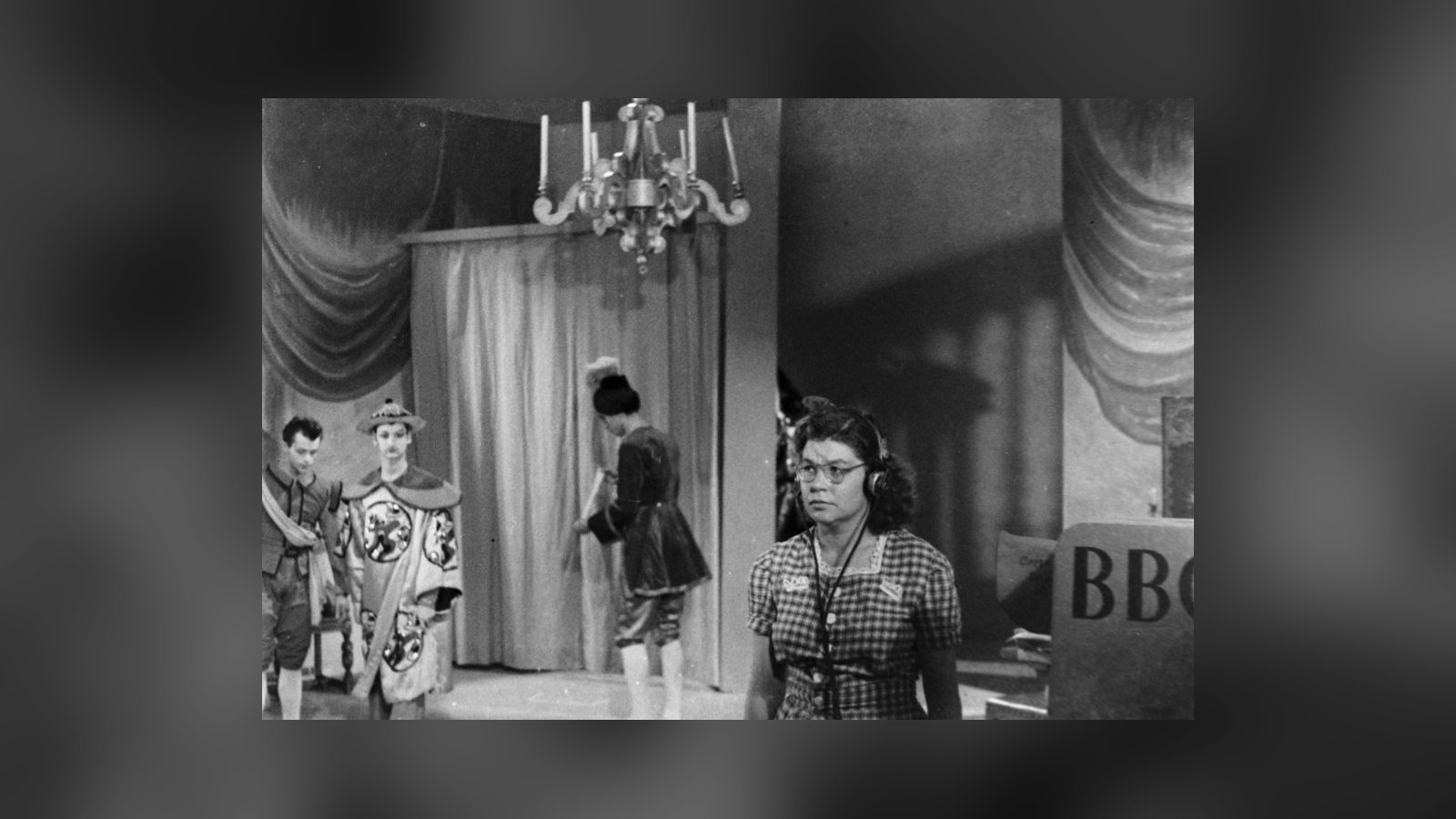 Molly Brownless, the BBC's first camerawoman, in a television studio in 1947, after the service came back from the war. Photo: unknown author, public domain, via Wikimedia Commons.
The cartoon that waited almost seven years
On Friday, Sept 1, 1939, Britain was days from war. The government feared the Alexandra Palace signal could help guide enemy bombers to London, and the transmitter was needed for other work. About 50 of the TV engineers would soon leave for radar.
The last program that day was a Disney cartoon, Mickey's Gala Premiere. There's a popular story that the station cut off Mickey mid-scene. It didn't. The cartoon played all the way through, and at 12:35 p.m., half an hour past the planned closing time, the screens switched over to test signals without a single word of announcement to anyone watching. The rest of that day's schedule had already been printed, including "A Visit to Regent's Park Zoo." Nobody saw it.
Television was gone for almost seven years.
On Friday, June 7, 1946, the service came back, and Jasmine Bligh, one of the original 1936 announcers, greeted the audience as if she'd just stepped out for a minute: "Good afternoon everybody. How are you? Do you remember me, Jasmine Bligh?"
Then, after an opening ceremony, the BBC played Mickey's Gala Premiere again, the same cartoon it had shown on its last afternoon before the war.
References
- Source: BBC, History of the BBC, "First regular television service," Nov 2, 1936
- Source: BBC, History of the BBC, "The contest" (Alexandra Palace, mast height, coin toss, ceremony performed twice, Madden quote, 405 lines until 1985)
- Source: David Hendy, BBC 100 Voices, "Opening night" (Dixon, about 400 lookers-in, Lai Founs, breaks for eye strain, schedule, budget, Reith)
- Source: BBC 100 Voices, "Sets and signals"
- Source: BFI Screenonline, "Television technology: the BBC service" (set prices, lookers-in competition, coronation, closure in 1939)
- Source: Science and Media Museum, "A history of British television in 15 key moments" (Baird dropped Feb 1937, 9,000 sets at the coronation, about 20,000 by 1939)
- Source: Finlo Rohrer, BBC News Magazine, "The day TV was switched off," June 7, 2006 (Sept 1, 1939, Mickey's Gala Premiere, Regent's Park Zoo listing, Bligh's greeting, engineers to radar)
- Source: BBC, History of the BBC, "Television returns" (June 7, 1946, Bligh, first program a repeat of Mickey's Gala Premiere)
- Source: Federal Communications Commission, "Antennas and Digital Television"
- Source: Federal Communications Commission, "Rescan your TV"