
On this page · 4 sections
Ninety-nine years ago today, at one minute after midnight on Nov 13, 1927, cars started rolling under the Hudson River. They went in from New York and from Jersey City at the same time, into two long tubes lined with white tile. More than a thousand cars had lined up on the New Jersey side alone. By the end of that first day, 52,285 vehicles had made the trip.
Digging under a river was hard. Breathing under one was the harder problem.
Car exhaust carries carbon monoxide. It is a gas you can't see or smell, and it can make people sick or kill them. Put a mile and a half of idling cars inside a sealed pipe under the water, and you have built a trap. Tests at Yale, the University of Illinois and the U.S. Bureau of Mines found the limit. More than 4 parts of the gas in every 10,000 parts of air was too much.
So the engineers tested it the hard way. In a government test mine in Bruceton, Pennsylvania, they built a test tunnel about 400 feet long and drove cars around inside it. People rode along and breathed the fumes. Doctors checked their pulse and even took blood samples. Not a job most people would sign up for.
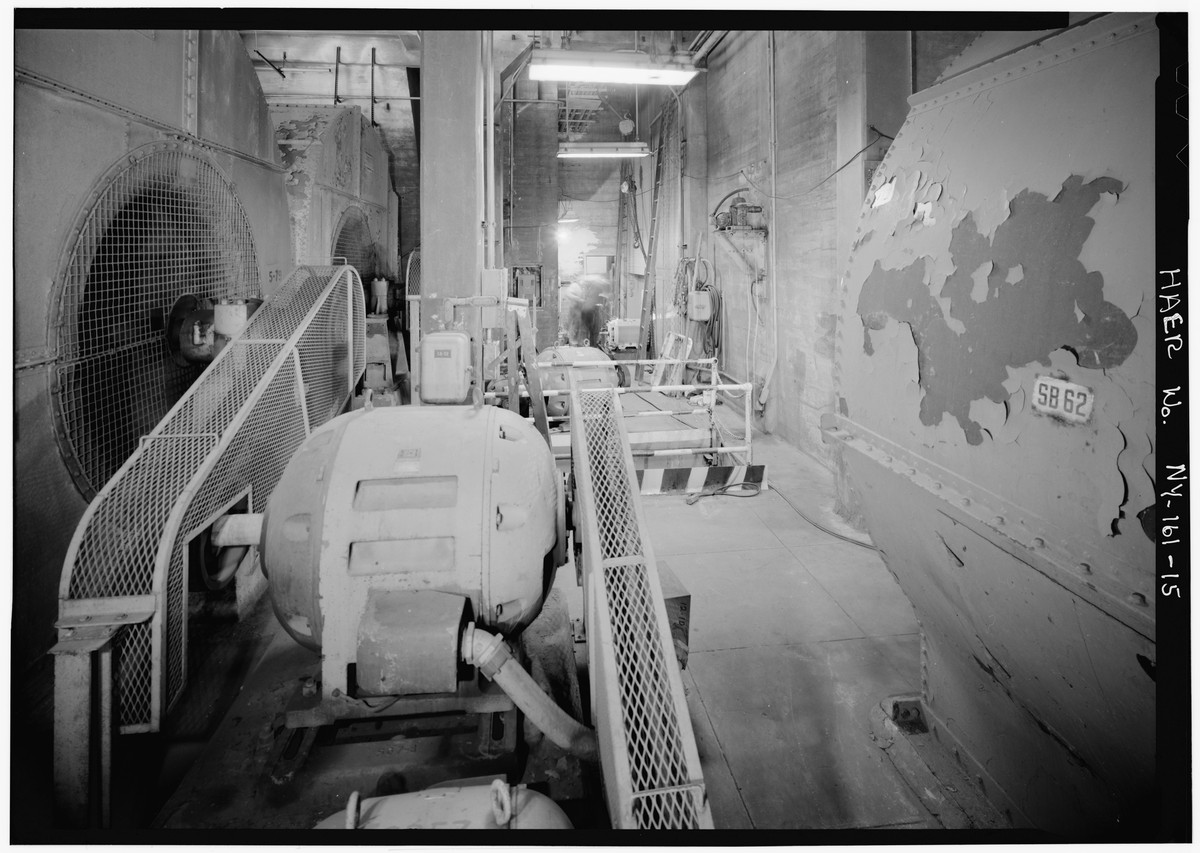 Ventilation blowers inside a Holland Tunnel ventilation building. Photo: Jet Lowe, Historic American Engineering Record, 1985 (public domain), Library of Congress via Wikimedia Commons.
Eighty-four fans and a lot of fresh air
The answer was wind on purpose. Four ventilation buildings, two on each side of the river, held 84 giant fans. Some blew fresh air into the tunnel through vents near the road. Others pulled the dirty air out through ducts in the ceiling. Together they swapped out all the air in the tunnel about every 90 seconds. No underwater car tunnel had been aired out by machines like this before. Later car tunnels around the world copied the idea.
The man who did not get to drive through
The tunnel is named for Clifford Holland. He finished Harvard in 1906, at 23, and headed straight for New York. "I am going into tunnel work," he said, "and I am going to put a lot more into it than I'll ever be paid for."
He meant it. His wife later described his work days. "Evening after evening he remained at work. Our dinner hour was always uncertain." Even after a night at the theater, he went back to the tunnel's field offices.
In October 1924, the two halves of the tunnel were about to meet under the river. A big ceremony was planned. Two days before it, Holland died of heart failure. He was 41. The crews broke through anyway, quietly, with no party. The next chief engineer, Milton Freeman, died only a few months later. A third engineer, Ole Singstad, designed the air system and finished the job.
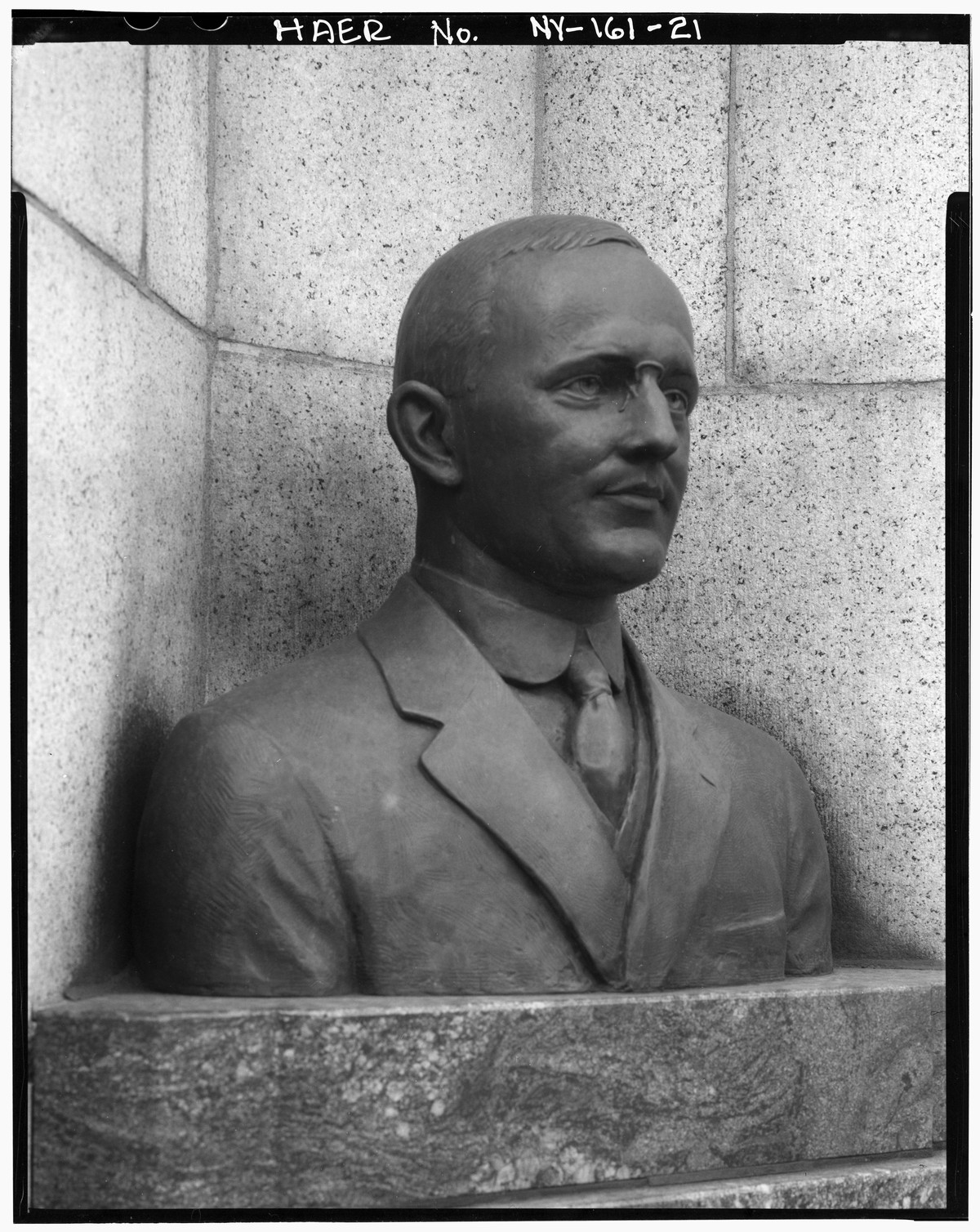 Bust of Clifford M. Holland at the tunnel's New York entrance. Photo: Jet Lowe, Historic American Engineering Record, 1985 (public domain), Library of Congress via Wikimedia Commons.
On the afternoon of Nov 12, 1927, President Calvin Coolidge, aboard his yacht, pressed a golden telegraph key. It was the same key President Wilson had used to set off a famous blast while the Panama Canal was being built. At both ends of the tunnel, two huge flags slid apart. Within an hour, 20,000 or more people had walked the whole way under the river.
Then came midnight, and the cars.
In the second car to pay a toll rode Mrs. Clifford Holland. With her was Mrs. Milton Freeman. Both of their husbands had died as chief engineer of this tunnel. They rode under the Hudson, breathing air the team had worked so hard to keep clean.
The fans are still at it. About every 90 seconds, the tunnel lets out one long breath and takes in a fresh one. It does it for every driver who goes under the river, and it did it that first night for two women in the second car.
Why it matters for your tech today
The Holland Tunnel's big idea was to move air on purpose. Pull fresh air in. Push the bad air out. Your laptop does a tiny version of the same job. Apple explains that many of its devices have sensors that notice when they heat up and turn on fans. Vents let those fans bring in cool air and push hot air out. When the fans speed up and you hear rushing air, that is a normal part of cooling.
So give your vents room to breathe. Apple suggests using a laptop on a hard, flat surface, like a table or desk. On a bed, a pillow, a couch or your lap, the fans may have to work harder.
The gas the tunnel was built to fight is still around, too. Carbon monoxide can come from cars, generators, furnaces and other things that burn fuel. You can't see it or smell it. The U.S. Consumer Product Safety Commission tells you to put a CO alarm on every level of your home and outside the rooms where people sleep. Test it every month, and change its batteries every year.
In 1927, it took 84 giant fans and a team of doctors to keep that air safe. Today, a small alarm outside your bedroom keeps watch all night.
Enjoyed this? Follow Tech Cheat Codes on TikTok for quick tech tips: Follow on TikTok. Or open TikTok and search "Tech Cheat Codes".
References
- Source: Port Authority of New York and New Jersey, "Holland Tunnel: History" (first Hudson River vehicular crossing; named for chief engineer Clifford M. Holland, who died before completion; successor Milton Freeman died five months later; finished under third chief engineer Ole Singstad; 1.6-mile tunnel; four ventilation buildings, 84 fans, a change of air every 90 seconds; first mechanically ventilated underwater vehicular tunnel; methods still the basis for underwater vehicular tunnels)
- Source: TIME, "Science: Holland Tunnel," Nov 21, 1927 (Coolidge's golden telegraph lever; flags separate; cars from both sides at one minute after midnight; Mrs. Clifford Milburn Holland in the second car to pay its toll, with Mrs. Milton H. Freeman; Yale / University of Illinois / Bureau of Mines tests, more than four parts of gas in 10,000 dangerous; 84 fans in four buildings, fresh air through floor vents, foul air out through ceiling ducts, air changed 42 times an hour; Holland left Harvard in 1906 at 23, "I am going into tunnel work..." quote; Mrs. Holland's "Evening after evening..." quote; died 1924 of heart failure; Freeman died months after him; Singstad completed the job)
- Source: The New York Times, Nov 13, 1927, "Great Crowd Treks Into Holland Tubes After Gala Opening" (golden telegraph key used by President Wilson to explode the charge that opened the Panama Canal; Coolidge on yacht; flags drawn aside at both entrances; 20,000 or more walked the tunnel within an hour; autos start at midnight; more than 1,000 cars lined up on the New Jersey side; Mrs. Holland and Mrs. Freeman in the second car)
- Source: ASME, Landmark #93, "Holland Tunnel Ventilation System" (first long underwater tunnel designed for motor vehicles, built 1920-1927; engineers Holland, Freeman and Singstad; ventilation based on Bureau of Mines tests; model for all succeeding vehicular tunnels; 42 blowing and 42 exhaust fans in four buildings)
- Source: The New York Times, Nov 14, 1927, "52,285 Autos Jam the Holland Tube in 'Sightseeing' Day" (52,285 vehicles on the first day; traffic from 12:01 Sunday morning)
- Source: Wikipedia, "Holland Tunnel" (Bruceton, Pennsylvania test tunnel over 400 ft with cars running; holing-through ceremony set for Oct 29, 1924; Holland died two days before, aged 41; tunnel holed through without ceremony; Freeman died March 1925; over a thousand vehicles waiting on the New Jersey side; 52,285 vehicles the first day)
- Source: Penn Libraries / Lehigh, "Ventilation Investigation Hudson River Vehicular Tunnel (Holland Tunnel)" finding aid (Yale, University of Illinois and Bureau of Mines experiments; Holland died in 1924 before the break-through; Freeman died five months later; Singstad's 84 fans, change of air every 90 seconds)
- Source: The New York Times, Oct 30, 1921, "Tests Show Safety of Vehicle Tunnel" (400-foot experimental tunnel near Pittsburgh; eight cars driven through it; no more than four parts of carbon monoxide in 10,000; people inside checked for pulse and blood samples)
- Source: National Park Service, National Register of Historic Places form, "Experimental and Safety Research Coal Mines" (Bureau of Mines experimental vehicular tunnel at Bruceton, 400 feet, used for Holland Tunnel ventilation tests)
- Source: The New York Times, Oct 30, 1924, "Blast Joins Halves of Vehicular Tube" (Holland died Monday; holing-through ceremony dropped out of respect)
- Source: Apple Support, "About fans and fan noise in your Apple product" (sensors turn on fans when temperature changes; vents let fans bring in cool air and expel hot air; rushing-air sound is normal; use a hard, flat surface; soft surfaces like a couch, pillow, bed or lap can make fans run more)
- Source: Apple Support, "Keep your Mac laptop within acceptable operating temperatures" (temperature sensors; fans turn on automatically; use a stable surface with good ventilation; not in bed, on a pillow or under bedding)
- Source: U.S. Consumer Product Safety Commission, "Carbon Monoxide Questions and Answers" (colorless, odorless poisonous gas; made by burning fuels and by engines such as cars and portable generators; CO alarms on every level of the home and outside sleeping areas)
- Source: U.S. Consumer Product Safety Commission, "CO Alarms" (replace alarm batteries annually and test alarms monthly; CO alarms on each level of the home and outside sleeping areas)