Scams
Scam Spotter: 5 checks before you click, pay or call back
Five quick checks to help you spot phone, text and email scams, in plain words.
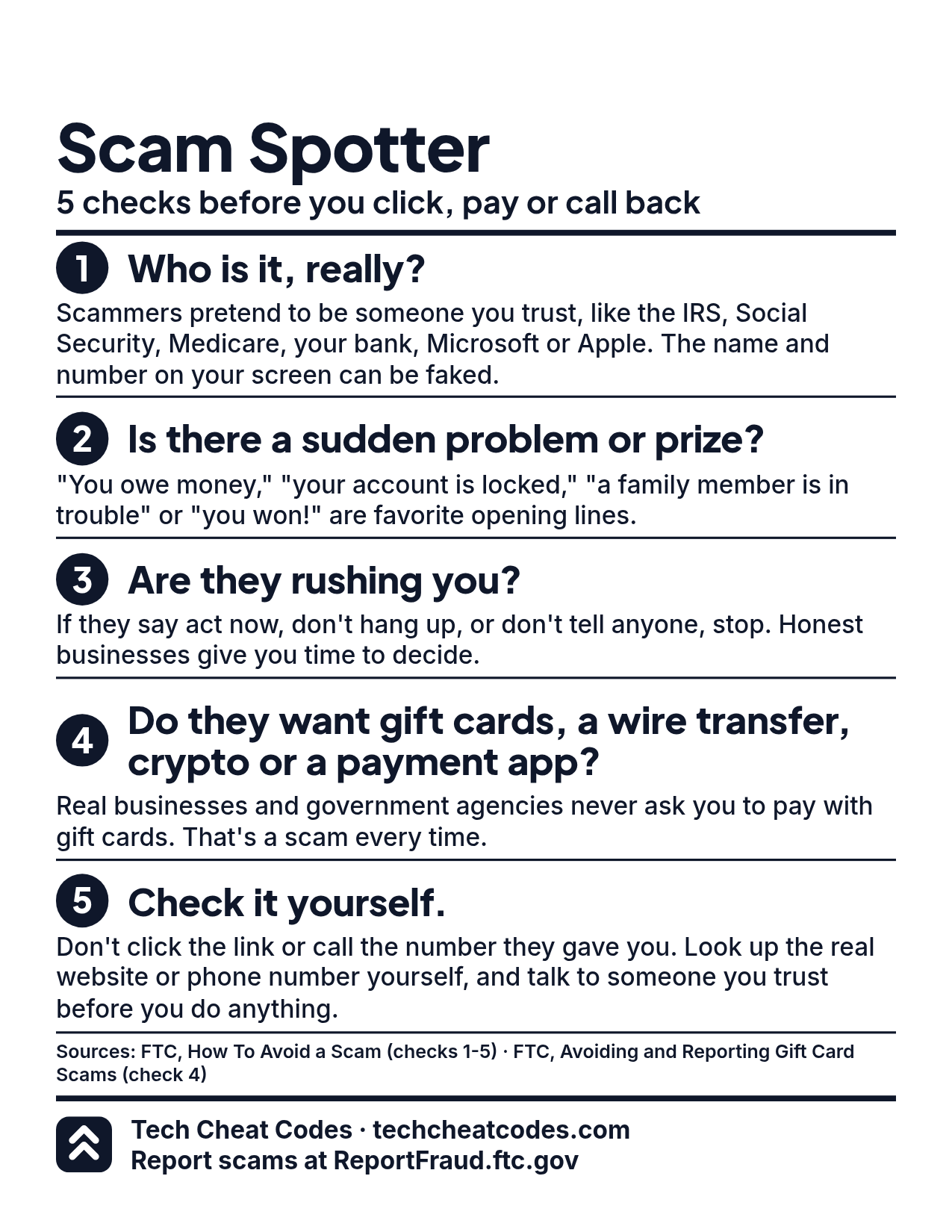
Free: the Scam Spotter card
Print one for your fridge, and one for your mom, dad or grandparents.
Share this page with a parent.
Get the free Scam Spotter card, plus Patch Notes, our tech email. (opens in a new tab) Unsubscribe any time.
The 5 checks
- Who is it, really? Scammers pretend to be someone you trust, like the IRS, Social Security, Medicare, your bank, Microsoft or Apple. The name and number on your screen can be faked. Source: FTC, How To Avoid a Scam (opens in a new tab)
- Is there a sudden problem or prize? "You owe money," "your account is locked," "a family member is in trouble" or "you won!" are favorite opening lines. Source: FTC, How To Avoid a Scam (opens in a new tab)
- Are they rushing you? If they say act now, don't hang up, or don't tell anyone, stop. Honest businesses give you time to decide. Source: FTC, How To Avoid a Scam (opens in a new tab)
- Do they want gift cards, a wire transfer, crypto or a payment app? Real businesses and government agencies never ask you to pay with gift cards. That's a scam every time. Sources: FTC, How To Avoid a Scam (opens in a new tab); FTC, Avoiding and Reporting Gift Card Scams (opens in a new tab)
- Check it yourself. Don't click the link or call the number they gave you. Look up the real website or phone number yourself, and talk to someone you trust before you do anything. Source: FTC, How To Avoid a Scam (opens in a new tab)
Report scams at ReportFraud.ftc.gov (opens in a new tab). Want more? Read Is This a Scam? 4 warning signs and what to do next.