
On this page · 2 sections
One hundred twenty-three years ago today, on Nov 10, 1903, the United States Patent Office issued patent 743,801 to Mary Anderson of Birmingham, Alabama, for a window-cleaning device she had designed for a streetcar vestibule. The big figure on the drawing is that front window. A rubber-edged arm sits on the outside of the glass. The handle is inside. The motorman could clear snow or sleet without stepping into the street.
She had seen the problem in New York, early in the century, from a trolley seat. The driver stopped the car and got out to wipe the front window by hand. Back in Birmingham she had a working model made, then filed the application on June 18.
The patent is exact about how the thing should feel in use. Wooden strips on the arm held a rubber against the pane. Springs kept that pressure even as the arm swept a fan of glass from a pivot at one corner — the hatched area marked a on her Figure 2. A counterweight balanced the arm so it would not drag. The motorman only had to take the handle and turn it, one way or the other. In fair weather you unscrewed a thumb-screw, lifted the arm off, and pushed the inside handle flush with the plate so nothing stuck out into the vestibule.
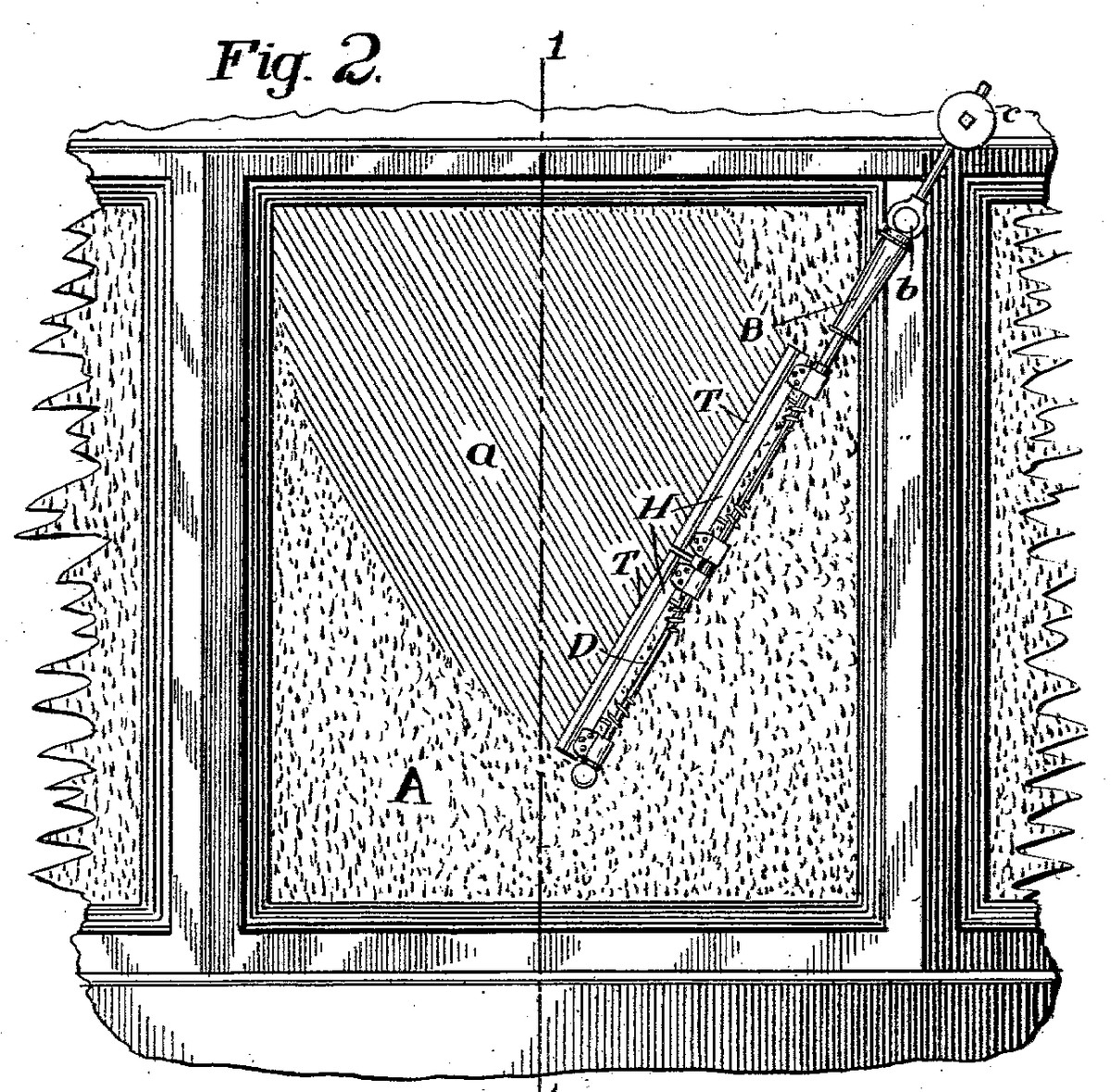 Figure 2 from Mary Anderson's window-cleaning-device patent, Nov 10, 1903. U.S. Patent 743,801 (public domain), via Wikimedia Commons.
A letter, then the patent ran out
In 1905 she wrote a Canadian firm about selling the patent. The company saw no commercial value in the device and declined to produce it. Later accounts treat that letter as the only time she tried to market the invention. Her own version of the arm was not put into production.
The patent expired in 1920. Two years later, a windshield wiper was standard equipment on Cadillac's enclosed 1922 models. Anderson was still in Birmingham, where she later managed the family's Fairmont apartment building until her death. She died in 1953 at her summer home in Monteagle, Tennessee.
Rain still does what it did to that New York streetcar window. A rubber blade still swings from a corner of the glass, and the person behind it stays inside.
Enjoyed this? Follow Tech Cheat Codes on TikTok for quick tech tips: Follow on TikTok. Or open TikTok and search "Tech Cheat Codes".
References
- Source: U.S. Patent 743,801, Mary Anderson, "Window-cleaning device," filed June 18, 1903, issued Nov 10, 1903 (Birmingham, Alabama; radially swinging arm actuated by a handle from inside a car vestibule; rubber on wooden strips; springs for even pressure; hatched sweep area in Fig. 2; removable arm / thumb-screw; counterweight; flush inside handle; snow, rain, or sleet in front of the motorman; Google Patents lists anticipated expiration Nov 10, 1920)
- Source: Encyclopedia of Alabama, J. Fred Olive III, "Mary Anderson" (born Feb 19, 1866, Greene County; NYC trolley: motorman stopped, got out, cleaned windows by hand; model built in Birmingham; patent 743,801 on Nov 10, 1903; 1905 letter to a Canadian firm that saw no commercial value and declined to produce it; apparently her only marketing attempt; her version never put into production; managed Fairmont Apartments; died June 27, 1953, Monteagle, Tennessee; National Inventors Hall of Fame 2011)
- Source: National Inventors Hall of Fame, Mary Anderson inductee page (NYC trolley in snow, early 1900s; drivers opened windows or stopped and went outside to clear the glass; lever inside controlling a spring-loaded arm with a rubber blade and counterweight; 1903 patent; Cadillac began installing the wiper as standard equipment in 1922; died June 27, 1953)
- Source: The (New) Cadillac Database, "Cadillac photos, 1922-23" / Type 61 (factory-catalog notes: all enclosed 1922–23 models had a windshield wiper and a rear view mirror as standard equipment)