
On this page · 4 sections
Forty-six years ago today, on Nov 6, 1980, Bill Gates signed a contract for Microsoft to create an operating system for IBM's forthcoming personal computer. The machine was still a secret. The software shop was five years old and already good at BASIC for the microcomputers of the moment, which is exactly the wrong résumé for the job IBM suddenly needed filled. An operating system was the blank on the page.
IBM needed one anyway. The Boca Raton team building the PC was racing a one-year deadline and a roughly $1,500 price target, so they were buying parts off the shelf instead of inventing every piece in-house. Microsoft already had a deal to supply BASIC. When IBM asked whether the same little company could also supply the OS, Gates signed.
They promised an OS they did not have
Microsoft's catalog in late 1980 leaned hard on languages. BASIC was the product people knew, the thing that had already put the company in rooms with hardware makers who needed something to run when the power came on. A disk operating system for a new 16-bit IBM machine was not sitting on a Microsoft shelf waiting for a ship date.
IBM had already looked elsewhere. In August 1980, IBM visited Digital Research in Pacific Grove, California, about CP/M-86, the forthcoming 16-bit version of the then-dominant microcomputer OS. The two sides could not agree on licensing terms. IBM left and kept hunting.
That left the door open for Microsoft. And Microsoft, which had just promised IBM an operating system, went shopping for one.
Quick and dirty, then suddenly not
The OS Microsoft found belonged to Seattle Computer Products, a small hardware outfit selling an Intel 8086 CPU card for builders who needed a 16-bit board and something to run on it. SCP had wanted to ship CP/M-86 with that kit. CP/M-86 was late. So in 1980, SCP engineer Tim Paterson wrote a stand-in. He called the early version QDOS — Quick and Dirty Operating System — and later renamed it 86-DOS.
Paterson designed it so programs written for CP/M could be carried over to the new Intel chip, which made it a handy bridge for software shops. True to its nickname, it was basic but serviceable.
Microsoft licensed 86-DOS from SCP in December 1980 for a flat $25,000. The written license agreement is dated Jan 6, 1981. SCP suspected the mystery customer was IBM. They did not know for sure. In a Softalk interview published in March 1983, Paterson put it this way: "We all had our suspicions that it was IBM that Microsoft was dealing with, but we didn't know for sure."
Paterson left SCP for Microsoft in 1981. His Softalk line about the first day still lands: "The first day on the job I walk through the door and 'Hey! It's IBM.'"
By the next summer, Microsoft wanted more than a license. Owning the OS outright meant it could license the software to companies making IBM PC clones. On July 27, 1981, Microsoft bought full rights to 86-DOS for another $50,000 — $75,000 total. SCP kept a way to ship the OS with its own hardware. Microsoft kept the right to license it to everyone else.
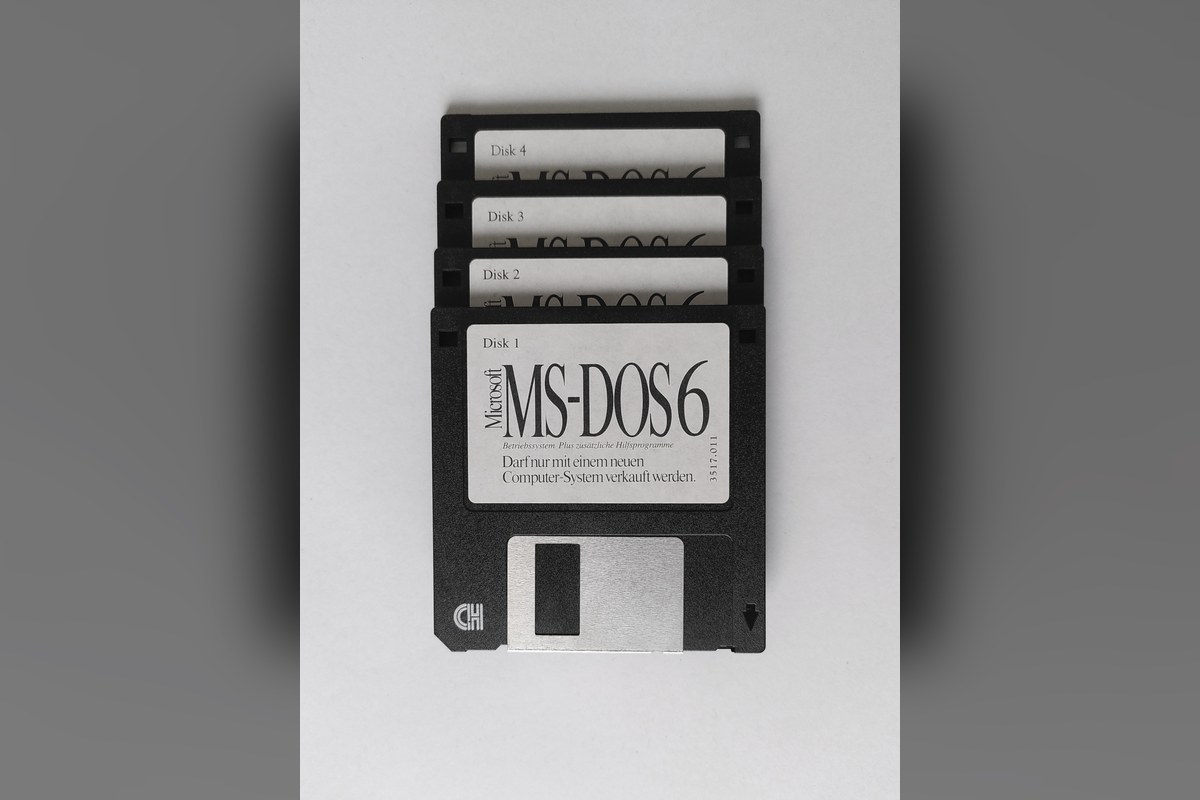 MS-DOS 6 install disks, a later version of the line that grew out of 86-DOS. Photo: Stefan Nagy, CC BY-SA 4.0, via Wikimedia Commons.
The beige box, two names for the same software
On Aug 12, 1981, IBM unveiled the IBM Personal Computer — model 5150 — at New York's Waldorf Hotel. The base model was priced at $1,565. Microsoft's adapted OS shipped to IBM customers as PC-DOS. The same software family went out to other manufacturers as MS-DOS. Microsoft retained ownership.
IBM did one more unusual thing for a company that had once designed nearly everything it sold. It published technical specs and opened the architecture, so other companies could build add-ons and, soon enough, whole machines that behaved like the IBM PC. Those clones needed an operating system. Microsoft was ready to sell them one.
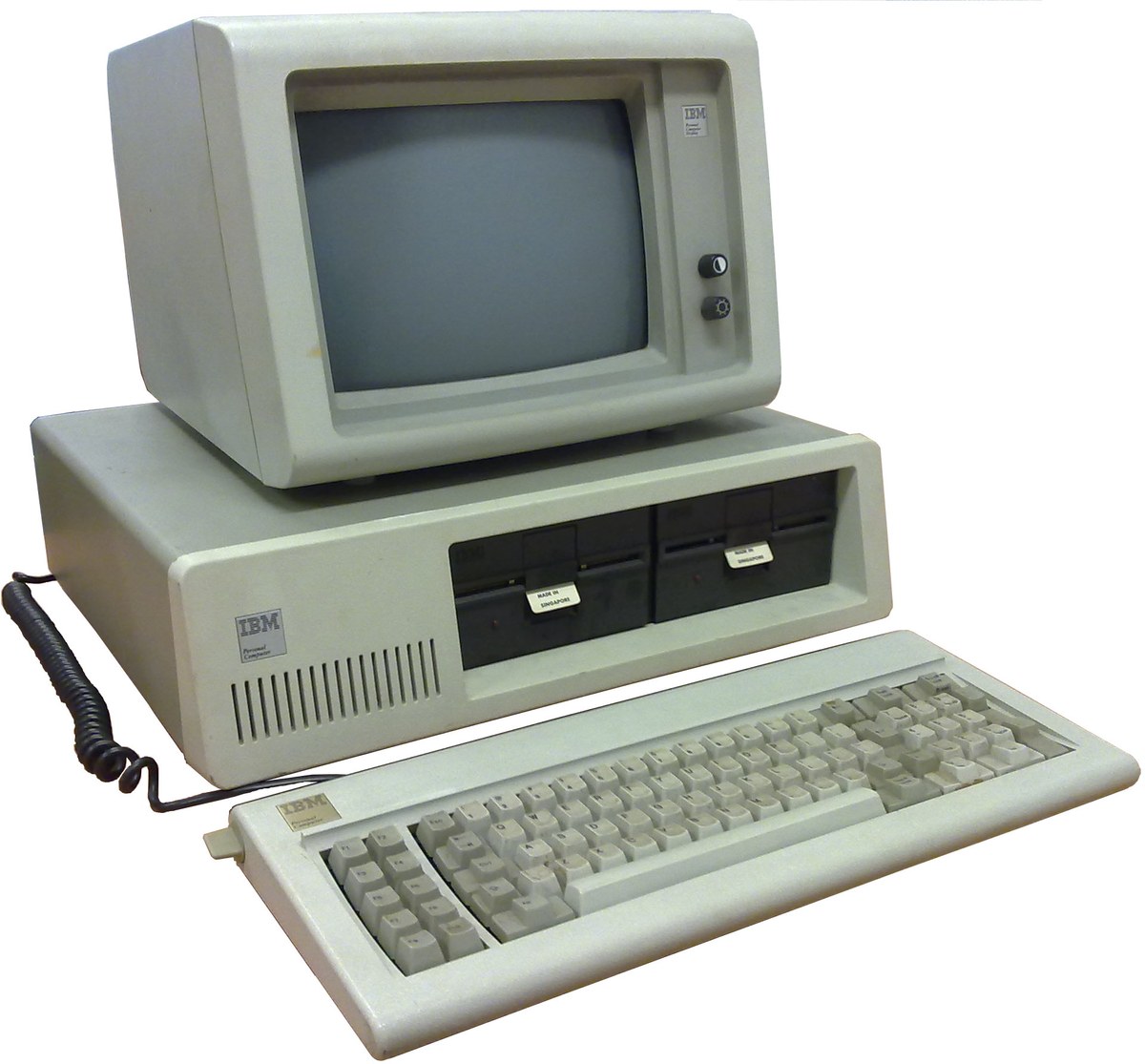 An IBM PC 5150 with its 5151-style monochrome monitor and keyboard. Photo: Ruben de Rijcke, CC BY-SA 3.0, via Wikimedia Commons.
In the 12 months after MS-DOS first went to IBM, Microsoft licensed it to more than 70 other companies. Whatever name went on the case, the software underneath sent a check to Microsoft.
IBM got the beige box people still picture when they hear "PC." Microsoft kept the operating system it had promised on Nov 6 — bought for $75,000 instead of written in-house — and the right to sell that same layer to every clone maker that followed. The supplier hired to fill one blank walked out owning the software every clone needed.
Today's cheat code: if your Windows PC feels stuck, try these free fixes before you buy anything — Why Is My Computer So Slow? 6 Free Fixes to Try Before You Buy Anything.
Enjoyed this? Follow Tech Cheat Codes on TikTok for quick tech tips: Follow on TikTok. Or open TikTok and search "Tech Cheat Codes".
References
- Source: Computer History Museum, This Day in History, November 6 — "Microsoft Signs Contract with IBM to Create Operating System" (Nov 6, 1980 contract; foundation from Seattle company software)
- Source: Leonard J. Shustek / Computer History Museum, "Microsoft MS-DOS early source code" (Nov 1980 IBM contract with no OS yet; DRI visit Aug 1980, no agreed terms; QDOS/86-DOS by Tim Paterson at SCP; Dec 1980 $25k license / agreement dated Jan 6, 1981; +$50k full rights next summer; Softalk Paterson quotes; retained rights and clone licensing; Aug 1981 PC DOS 1.0)
- Source: Centre for Computing History, "Microsoft signs contract with IBM to create MS-DOS" (Nov 6, 1980 Gates signed; 86-DOS foundation; licensed MS-DOS to 70+ companies in the following 12 months)
- Source: IBM History, "The IBM PC" (Aug 12, 1981 unveil of 5150; open architecture and published technical reference; Microsoft provided the OS; off-the-shelf parts; ~$1,565 entry price)
- Source: Softalk, March 1983, "The Roots of DOS: Tim Paterson," via PatersonTech (CHM citation; SCP suspicions; first-day IBM line)
- Source: The Register, Tony Smith, "Microsoft's MS-DOS is 30 today" (July 27, 1981 full purchase for additional $50,000 / $75,000 total; Softalk Paterson quote on the deal closing; QDOS naming)