
On this page · 5 sections
The most famous cry for help on Earth is an acronym for nothing. SOS doesn't mean "Save Our Souls." It doesn't mean "Save Our Ship." Somebody made those up later, because people hate a mystery.
The real story is a roomful of diplomats in Berlin. On Saturday, Nov 3, 1906, delegates from about 30 countries signed the first International Radiotelegraph Convention, an early set of rules for the brand-new business of sending messages through the air. Tucked inside was the choice of a single distress call for ships at sea: three dots, three dashes, three dots.
That's 120 years ago tomorrow, Tuesday, Nov 3, 2026. The call is still in your pocket.
The trouble with CQD
Before Berlin, there wasn't one distress signal. There were several, and that was the problem.
The Marconi company, the biggest name in early radio, used CQD. CQ was the general call that meant "all stations, listen." The D stood for distress. It didn't stand for "Come Quick, Danger," another phrase people invented afterward.
CQD had a weakness that sounds small until you picture it at 2 a.m. in a storm. Carlos Eavis, of the Radio Society of Great Britain, put it plainly in 2008: "It was too easy for someone to hear the C and the Q and not the D and ignore it completely."
Other countries had their own versions. The Italians used SSSDDD. The Germans used SOE, which had a flaw of its own, because E in Morse code is one lonely dot and easy to miss.
SOS fixed that. It's symmetrical and hard to mistake. It's sent as one unbroken run, with no gaps between letters. Send those same nine sounds with the wrong gaps and they could also be read as IJS, SMB or VTB, none of which anybody wants to see in a sinking ship's log. But nobody listening for SOS was thinking about letters. They were listening for a rhythm.
The rules took effect on Wednesday, July 1, 1908, and from then on, radio stations were bound to give distress calls absolute priority, stop all their other traffic and answer.
The first American SOS
Old habits held on at sea. Plenty of operators kept sending CQD, and some sent both, just to be safe.
On Wednesday, Aug 11, 1909, the steamship Arapahoe lost its propeller shaft off Cape Hatteras, North Carolina. Its wireless operator, Theodore Haubner, hesitated. The new code had been ratified, but he wasn't sure which call to send. He sent both.
The wireless station at Hatteras heard him, and the Arapahoe was rescued. It's the first recorded American use of SOS. A few months later, Haubner picked up an SOS from another ship, the Iroquois, which made him the first American operator to both send and receive one, and his headphones are now in the collection of The Henry Ford museum in Michigan.
What it means for you
SOS left the radio room a long time ago, but the idea is built into iPhones and newer Android phones. One quick move calls emergency services, even from a locked screen, and can then share your location with the people you trust.
On an iPhone, press and hold the side button and either volume button until the sliders appear, then keep holding, and when the countdown ends, the phone calls emergency services on its own. You can also turn on Settings > Emergency SOS > Call with 5 Presses, so five fast presses of the side button do the same thing. Afterward, the iPhone texts your emergency contacts with your location. You set those contacts up in the Health app, under Medical ID. Newer iPhones also have Emergency SOS via satellite for places with no cell signal.
On Android 12 and later, press the power button five times or more. Depending on your settings, you either touch and hold a red circle or wait out a short countdown before the call goes through. Set it up first under Settings > Safety & emergency > Emergency SOS. One catch is worth knowing. Emergency SOS on Android doesn't work in airplane mode or with Battery Saver on.
If you set it off by accident, don't hang up. Stay on the line and tell the dispatcher you don't need help.
This takes about five minutes to set up on a parent's or grandparent's phone. Do it while you're sitting together, and show them which buttons to press, but don't practice the full move, because that places a real emergency call.
The young man with his headphones on
On the night of Sunday, April 14, 1912, the Titanic struck an iceberg. Its chief wireless operator was Jack Phillips. He had learned Morse code as a teenager working at the post office in Godalming, his hometown in England, and in 1906, the same year the world settled on SOS, he left for the Marconi company's training school.
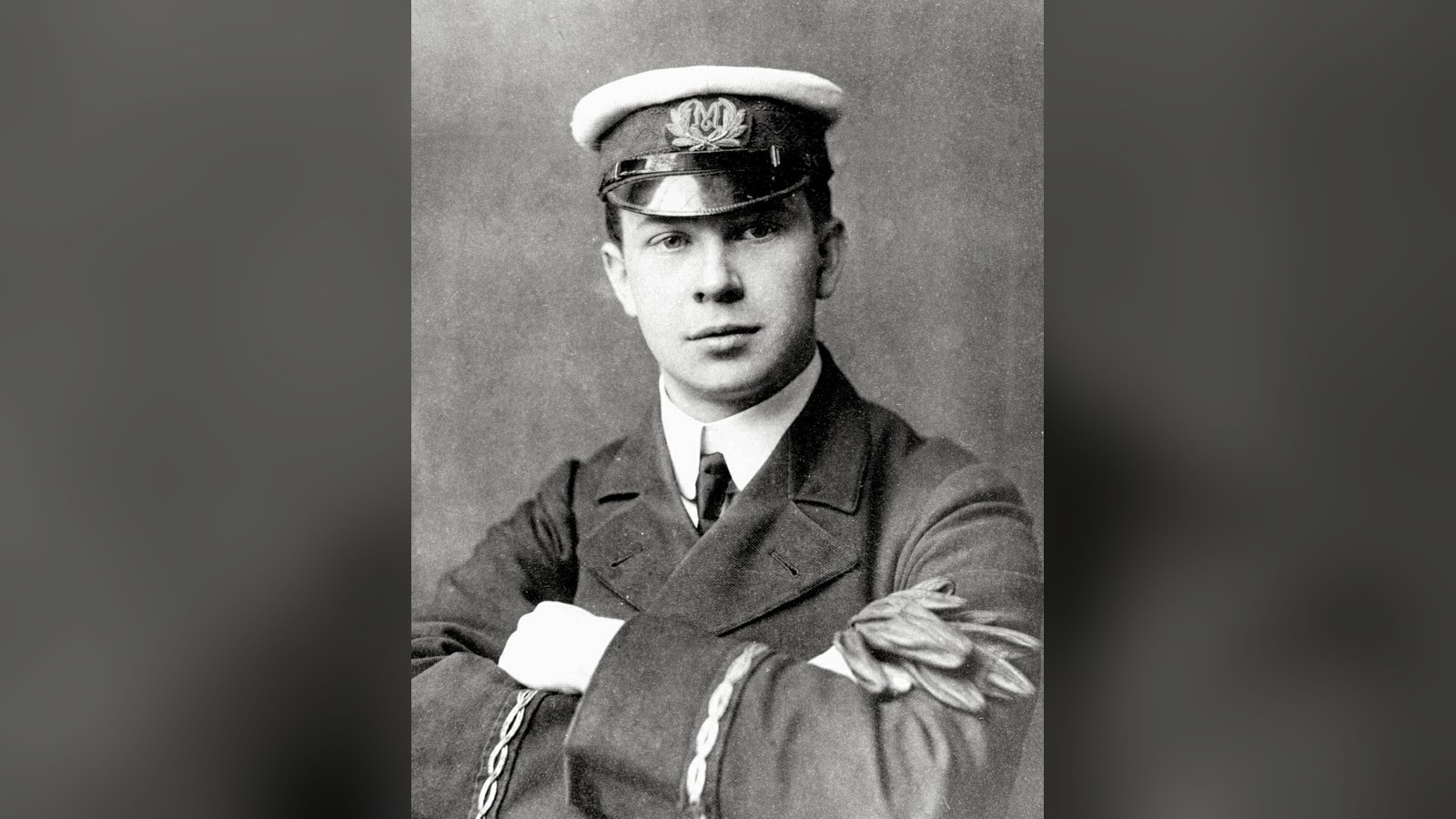 Jack Phillips, chief wireless operator of the Titanic, around 1910. Photo: Jennie Stedman, public domain, via Wikimedia Commons.
Phillips sent CQD first. His junior operator, Harold Bride, suggested the new call, with a dark joke he later recounted: "Send SOS. It's the new call, and it may be your last chance to send it." Phillips switched, and for the rest of the night the Titanic alternated between the old call and the new one, sending each in turn into the dark.
Miles away, on the liner Carpathia, a 21-year-old operator named Harold Cottam had his coat off and was about to go to bed, but he still had his headphones on because he was waiting for a reply from another ship. At the US Senate inquiry, held at the Waldorf Astoria in New York, a senator pressed him on exactly how ready for bed he'd been. Had he taken off his shoes? "No, sir."
While he waited, Cottam picked up messages for the Titanic being sent from Cape Cod. Nobody asked him to, but he called the Titanic to let it know. The answer came straight back: "Come at once. It is a distress message; C. Q. D."
The senator wanted to know who had told him to make that call.
"I did it of my own free will," Cottam answered.
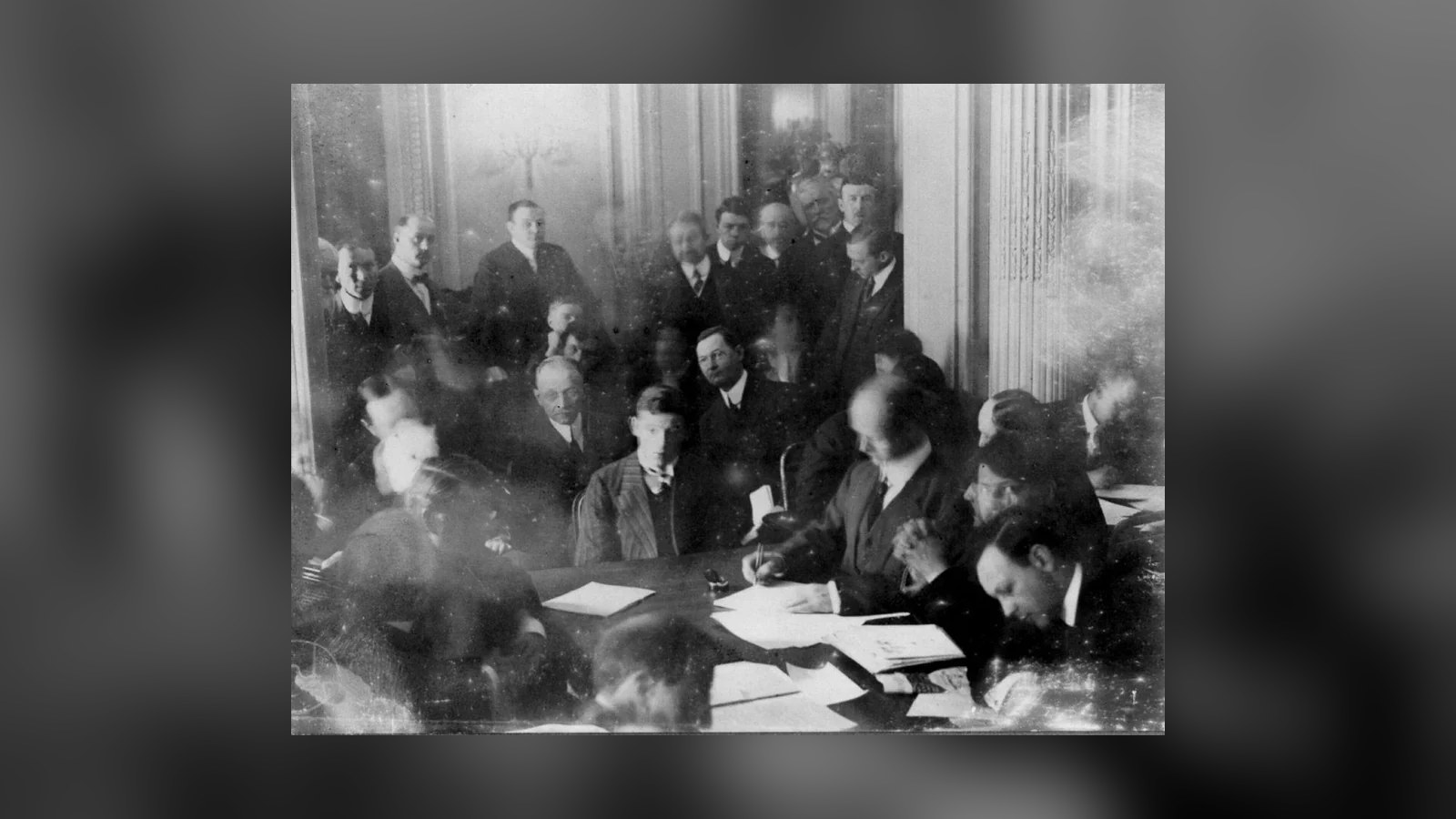 Harold Cottam, the Carpathia's wireless operator, at the US Senate inquiry at the Waldorf Astoria in New York, April 1912. Photo: unknown author, public domain, via Wikimedia Commons.
The Carpathia turned around and raced through the ice toward the Titanic. It picked up the first lifeboat at 4:10 a.m. By 8:30, the last survivors were on board.
Phillips didn't leave his post. When the captain released the crew, Bride tied a life jacket on him while he kept working. Then Phillips sent Bride off to save himself. The last signal from the Titanic was picked up at 2:17 a.m. The ship went under three minutes later.
Jack Phillips died four days after his 25th birthday. His body was not recovered. Two years to the day after the sinking, his hometown opened a memorial for him, a brick cloister and garden by the river, built for the boy from the post office who learned Morse code there and spent the last minutes of his life calling for help.
References
- Source: International Telecommunication Union, "ITU Radio Regulations" press release, July 4, 2024 (1906 Berlin convention, 30 states, SOS)
- Source: US Government Printing Office text of the International Wireless Telegraph Convention, signed Nov 3, 1906, via Early Radio History
- Source: Nature, "The International Wireless Telegraph Conference," 1906
- Source: Finlo Rohrer, BBC News Magazine, "Save our SOS," June 13, 2008 (CQD, Eavis quote, SSSDDD and SOE, IJS, SMB and VTB)
- Source: North Carolina Department of Natural and Cultural Resources, "Distress Signal SOS First Heard at Hatteras, 1909," Aug 11, 2016
- Source: The Henry Ford, "Sending Out an SOS" (Haubner's headphones)
- Source: Apple Support, "Use SOS to contact emergency services on your iPhone"
- Source: Android Help, "Get help during an emergency with your Android phone"
- Source: Erin Blakemore, National Geographic, "Why Titanic's first call for help wasn't an SOS signal," May 28, 2020 (Bride's joke)
- Source: Titanic Inquiry Project, US Senate Inquiry, Day 1, testimony of Harold T. Cottam
- Source: Encyclopedia Titanica, "Harold Thomas Cottam" (age 21)
- Source: Titanic Inquiry Project, US Senate Inquiry report, "The Rescue" (lifeboats picked up 4:10 to 8:30 a.m.)
- Source: Godalming Museum, "John George (Jack) Phillips, 1887-1912, Chief Wireless Telegraphist on the Titanic"