
On this page · 3 sections
Fifty-nine years ago tonight. A Moon lander left Florida.
On Tuesday, Nov 7, 1967, at 07:39:01 Universal Time, an Atlas-Centaur numbered AC-14 rose from Launch Complex 36B at Cape Canaveral with Surveyor-F stacked on top — the craft the world would call Surveyor 6. Launch mass sat near 2,223 pounds, a little over a ton of aluminum tubing and thrusters, cameras, science gear and tanks stacked to prove a machine soft-landed on the Moon in one piece — and to tell Apollo whether a human crew would find firm ground.
Today is Saturday, Nov 7, 2026. That night launch turns 59.
NASA and the Jet Propulsion Laboratory had already sent earlier Surveyors to test the idea. Soft landing was the whole point. The Apollo program needed ground truth at candidate sites: dirt under footpads, chemistry under an instrument boom, and proof that a rocket plume would not dig a crater that swallowed the lander. Pretty orbital photos alone were not going to settle it. Surveyor 6 was the sixth flight in a seven-spacecraft series. Its destination was Sinus Medii, the Central Bay, almost dead center on the Moon’s near side, the last of four mare regions the program had marked for Apollo-site scouting.
Three days later it stuck the landing. Florida’s night fire had become a quiet gray plain at the center of the Moon’s face.
Soft touchdown in the middle of the Moon
Surveyor 6 settled onto Sinus Medii at about 01:01:04 UT on Nov 10, 1967. Controllers announced the spot as roughly 0.46 degrees north and 1.37 degrees west; later refinements put it nearer 0.473 degrees north and 1.427 degrees west. Either way, it was the flat, heavily cratered mare NASA wanted — smooth enough on paper for a crewed approach path, and central enough to matter for the first human landing zones.
The lander got to work. Its television camera started sending pictures. An alpha-scattering instrument tasted the soil’s chemistry. A bar magnet on a footpad checked for magnetic material. Auxiliary mirrors peeked under the frame. Over the next two weeks of lunar daytime, the craft returned 29,952 images — nearly thirty thousand frames of a gray plain that would decide whether astronauts would stand there.
Leonard D. Jaffe of JPL served as project scientist on the mission. The paperwork goals were plain: soft-land in Sinus Medii, get post-landing television, then pile on the secondary work — surface chemistry and touchdown dynamics, plus thermal and radar readings, and a vernier-engine erosion test. That last item was about to become the headline.
The first liftoff from another world
On Nov 17, 1967, ground control commanded Surveyor 6 to fire its three main liquid vernier thrusters for 2.5 seconds. The engines that had slowed it onto the Moon lit again. The lander rose about 10 feet — roughly 3 meters on NASA’s mission page — and settled about 8 feet, or 2.5 meters, west of the original footprints. (A later Johnson Space Center retrospective by John Uri rounded the height nearer 12 feet; the distance west matches across the accounts.)
It was not a long flight. It did not need to be.
That short burn made Surveyor 6 the first spacecraft launched from the lunar surface, and the first to lift off from any celestial body besides Earth. Controllers had wanted an engineering answer about restarting the rockets after they sat in Moon dust and vacuum. They got yes. Then the cameras turned back on the old landing scars. From a few feet west, the same craft studied the original footpad prints, watched how the plume had disturbed the soil, and built a short stereo baseline for mapping the terrain around it. Touchdown dynamics from the hop gave another look at how firm the surface really was.
The chemistry work kept pace. The alpha-scattering instrument logged about 30 hours of data. The soil read as basaltic, similar to what Surveyor 5 had found elsewhere in the maria — one more sign that those dark plains shared a common volcanic story. Engineering and soil-mechanics readings agreed with earlier Surveyors: the bearing strength was more than enough to hold a crewed lander. The ground would not swallow Apollo. That was the sentence the whole soft-lander series had been built to earn.
Lunar night arrived on Nov 24. Controllers put the spacecraft into hibernation on Nov 26 for the two-week dark stretch. Contact returned briefly on Dec 14, 1967, then faded for good. Primary surface operations were already finished. Asif A. Siddiqi’s NASA chronicle Beyond Earth later folded the mission into the long ledger of deep-space firsts; the flight logs already knew what mattered.
By then Surveyor 6 had done more than hop.
In February 1968, NASA’s Apollo Site Selection Board listed an area near Surveyor 6 among five potential zones for the first crewed landing. The board wanted smooth flat terrain and a clear approach path. Sinus Medii checked the boxes the robots had measured. With Surveyor 6, the equatorial mare survey the Apollo program needed was complete. That freed Surveyor 7 — the last of the series, aimed for January 1968 — to leave the safe plains and fly to a harder science target: the highlands near crater Tycho.
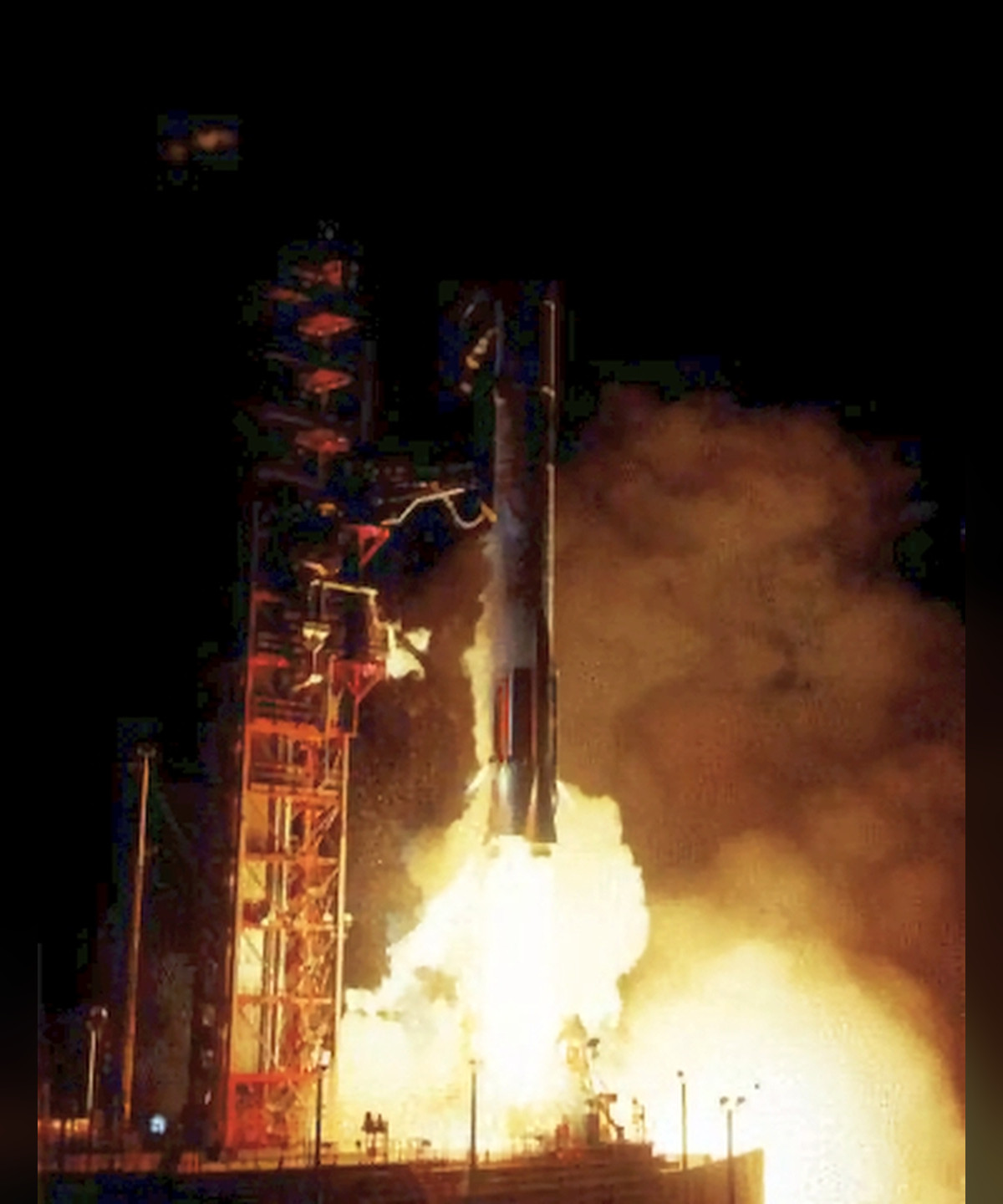 Night launch of Surveyor 6 on Atlas-Centaur AC-14 from Cape Canaveral, Nov 7, 1967. Photo: NASA (public domain), via Wikimedia Commons.
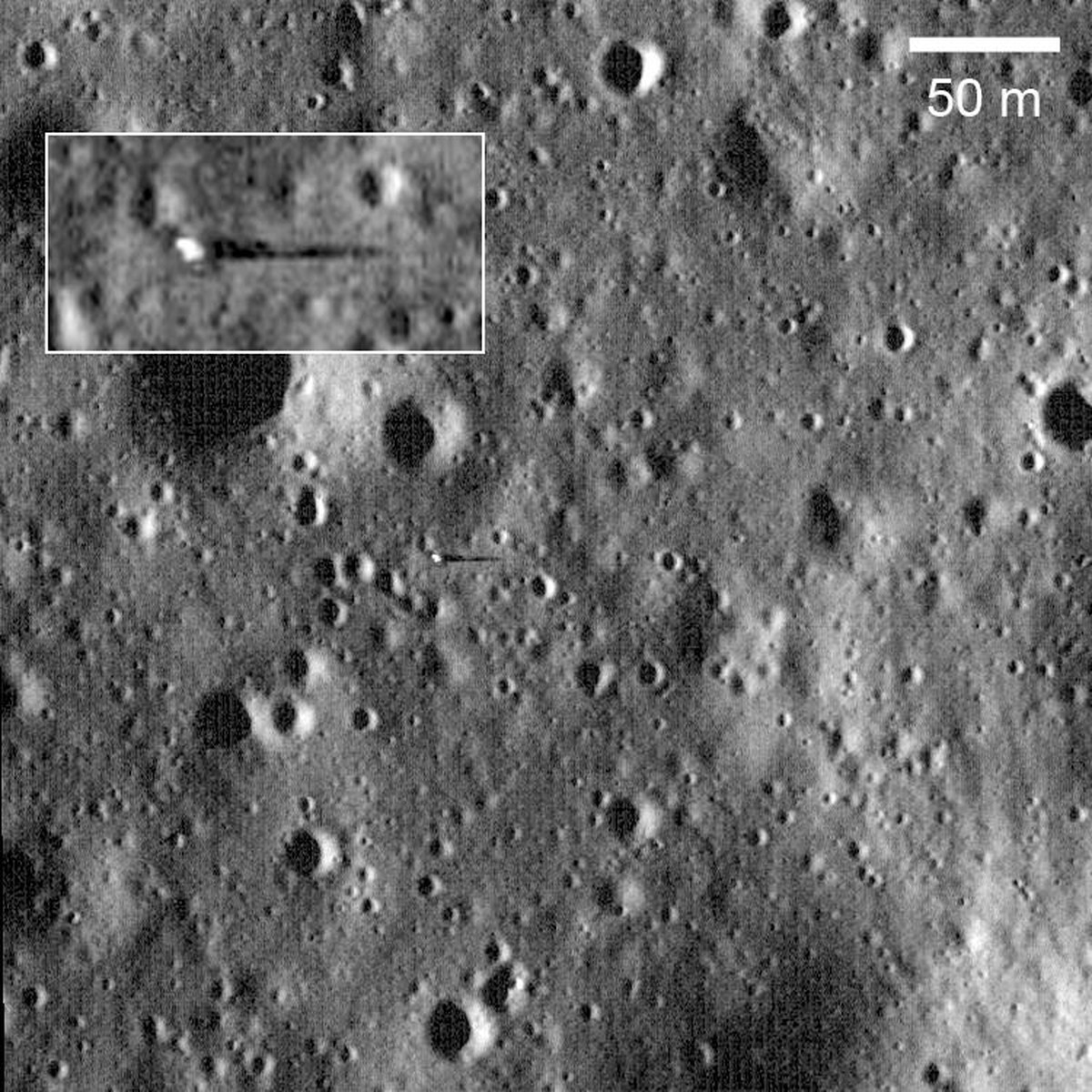 Surveyor 6 on the plains of Sinus Medii, still casting a long shadow decades later in Lunar Reconnaissance Orbiter imagery. Photo: NASA / GSFC / Arizona State University (LROC; PIA12978).
The Surveyor program existed to prove humans could land. Seven days after Surveyor 6 touched Sinus Medii, the machine itself briefly left the Moon first — a 2.5-second hop that turned a soft-lander into the first craft to rise from another world, while its soil data helped clear the runway Apollo needed. Fifty-nine years after that Florida night launch, the lander still sits on Sinus Medii, casting a long shadow in orbital photos, where a robot practiced leaving before anyone else did.
Today's cheat code: when you want to catch a real spacecraft crossing your own sky, start here — Spot the Station: ISS Turns 26, See It This Week.
Enjoyed this? Follow Tech Cheat Codes on TikTok for quick tech tips: Follow on TikTok. Or open TikTok and search "Tech Cheat Codes".
References
- Surveyor 6 — NASA Science, NASA Science, accessed Nov 6, 2026, 5:04 PM ET (launch 07:39:01 UT Nov 7 1967 LC-36B AC-14; Surveyor-F mass 2,223 lb / 1,008.3 kg; landing 01:01:04 UT Nov 10 Sinus Medii; hop Nov 17 ~10 ft / 3 m and ~8 ft / 2.5 m west after 2.5 s vernier burn; 29,952 images; alpha-scattering ~30 h; hibernation Nov 26; brief contact Dec 14; firsts: liftoff from Moon / celestial body; Siddiqi Beyond Earth cited)
- 50 Years Ago: Surveyor 6 Launches — NASA Johnson Space Center, John Uri, NASA Johnson Space Center, accessed Nov 6, 2026, 5:04 PM ET (night Atlas-Centaur launch; Sinus Medii landing; hop as restart test, ~12 ft high / 8 ft west; ~30,000 pictures; basaltic like Surveyor 5; bearing strength adequate for human landings; Feb 1968 Apollo Site Selection Board five zones incl. near Surveyor 6; equatorial mare survey complete → Surveyor 7 to Tycho)
- Surveyor VI — University of Arizona Lunar and Planetary Laboratory / Space Imagery Center, Arizona LPL, accessed Nov 6, 2026, 5:04 PM ET (launch Nov 7 1967 07:39:00 UTC; land Nov 10 01:01:06 UTC; hop Nov 17 10:32 UTC ~8 ft lateral; 29,952 TV pictures; alpha-scattering 30 h; stereo baseline / soil mechanics; hibernation Nov 26; last contact Dec 14; last of four Apollo mare areas; LROC NAC context)
- Surveyor 6 — NASA Space Science Data Coordinated Archive (NSSDCA/COSPAR 1967-112A), NASA NSSDCA, accessed Nov 6, 2026, 5:05 PM ET (Surveyor-F; soft-landing objectives; vernier hop 3–4 m high / ~2.4 m west at 10:32 UT Nov 17; 29,952 images; Project Scientist Dr. Leonard D. Jaffe, JPL; basaltic composition; Apollo obligation satisfied; program cost note)
- Surveyor 6 on the Plains of Sinus Medii (PIA12978) — NASA JPL Photojournal, NASA / GSFC / Arizona State University, accessed Nov 6, 2026, 5:05 PM ET (LROC NAC M117501284L; lander shadow; basalt chemistry note)
- Surveyor Night Launch — Astronomy Picture of the Day, NASA APOD (Robert Nemiroff & Jerry Bonnell), accessed Nov 6, 2026, 5:06 PM ET (Atlas Centaur night launch of Surveyor 6, early Nov 1967, Cape Canaveral; credit NASA)