
On this page · 3 sections
One hundred twenty-one years ago today, on Nov 7, 1905, Leonardo Torres-Quevedo stood on the terrace of Bilbao's Club Marítimo and steered an electric boat out on the Abra with radio telegraph clicks. The boat was the Vizcaya. Eight people rode it. Nobody on the boat was driving.
Torres-Quevedo was a Spanish engineer who had spent the early 1900s inventing airships and worrying about who would die testing them. His answer was a machine he named the Telekino — from the Greek for distant motion — a radio receiver that could take a short list of orders and turn them into real moves: forward, back, left, right, lights, a flag. He patented the idea in France and Britain in 1903 and showed it to the Paris Academy of Sciences the same year.
A tricycle first, then the water
Before the Abra, he practiced somewhere safer. In Madrid he ran a tricycle from a wireless telegraph key at about the length of a small gym. Then he put a dinghy on the pond at the Casa de Campo and steered it from the bank, out to roughly 250 meters. The clicks were not a single on-off trick. The Telekino could pick among several commands, which is the part later engineers still treat as the start of modern remote control.
Nikola Tesla had shown a radio-steered boat at Madison Square Garden in 1898. Torres-Quevedo's system was built for a longer menu of orders, and for machines he did not want a human inside.
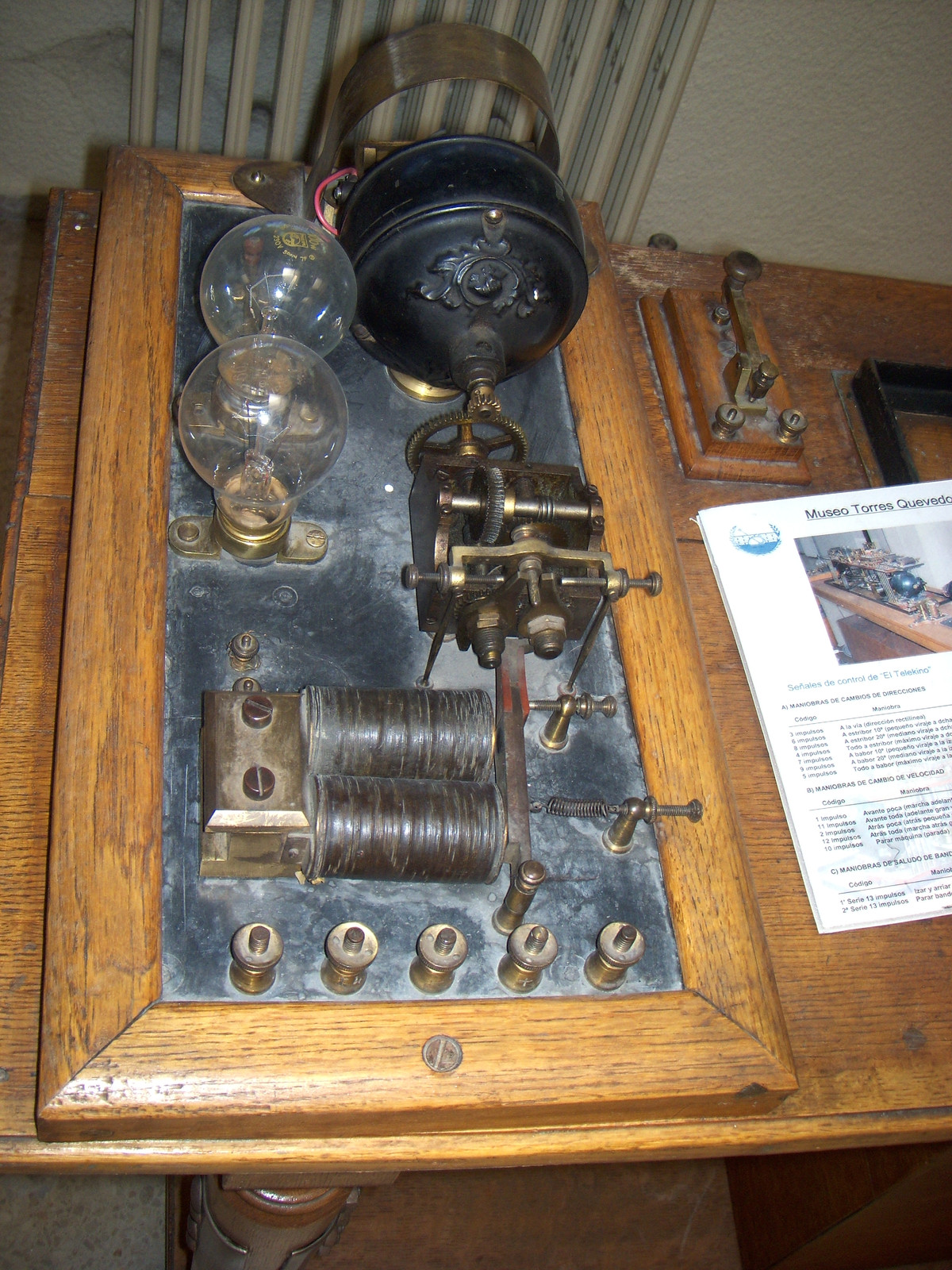 Telekino transmitter on display. Photo: MdeVicente, CC0, via Wikimedia Commons.
The balcony, the estuary, the eight
On that November day in Bilbao, authorities watched from shore while Torres-Quevedo worked the key from the yacht-club terrace. The Vizcaya left the club, crossed into the middle of the estuary, turned, reversed, and came back. Reports from the time put the working range past two kilometers — more than a mile of open water between the hand on the key and the boat that answered it.
A December 1905 write-up in La Energía Eléctrica and later IEEE histories treat the Bilbao runs as the proof that the Telekino was not a parlor trick. The Institute of Electrical and Electronics Engineers eventually put a Milestone plaque on the work, crediting Torres-Quevedo with laying down modern wireless remote-control principles.
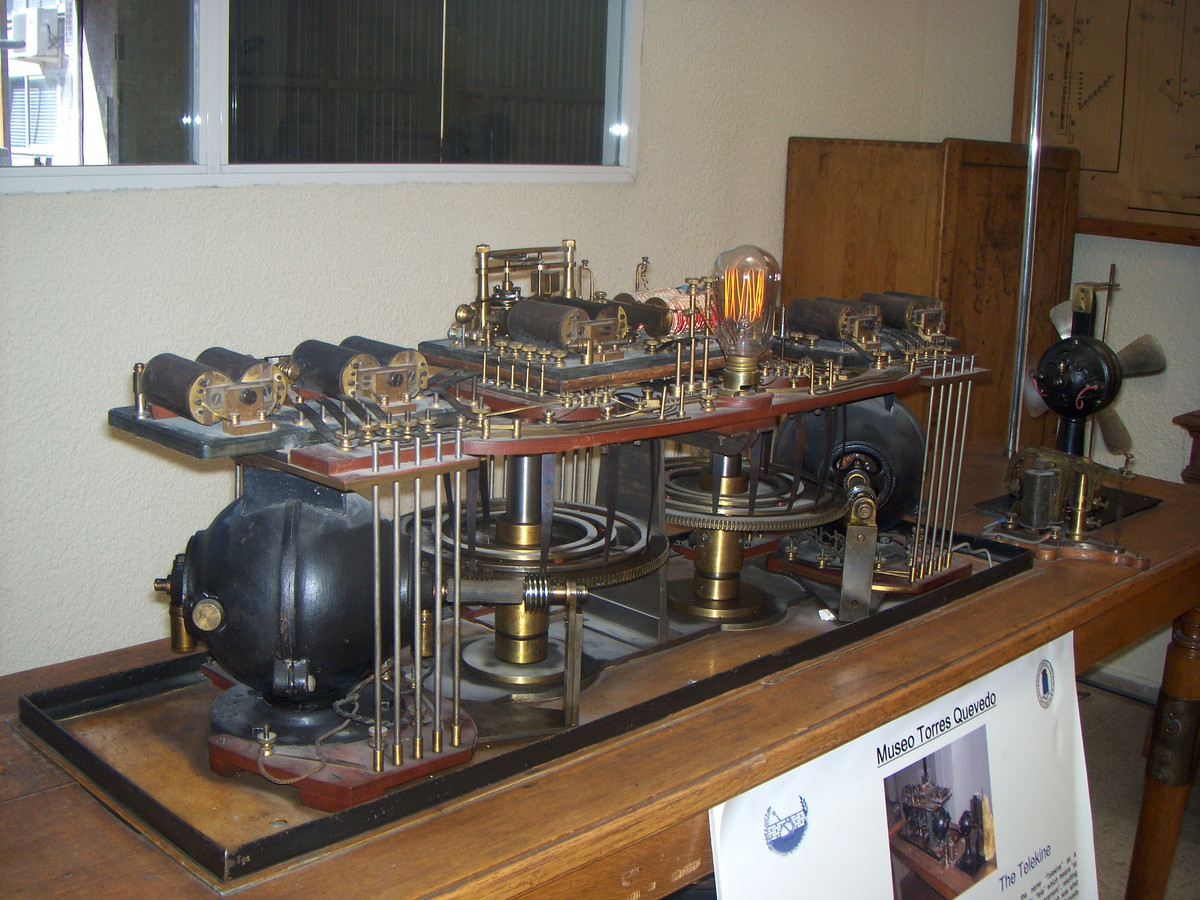 Telekino receiver — the box aboard that turned radio clicks into engine and steering moves. Photo: MdeVicente, CC0, via Wikimedia Commons.
He had built the Telekino so airship tests would not kill a crew. On the Abra that November, the crew was the proof: eight people riding a boat that nobody on deck was driving.
Today's cheat code: when a remote gadget at home ignores you, start here — Smart Home Device Won't Connect.
Enjoyed this? Follow Tech Cheat Codes on TikTok for quick tech tips: Follow on TikTok. Or open TikTok and search "Tech Cheat Codes".
References
- Source: Randy Alfred / Wired, "Nov. 7, 1905: Remote Control Wows Public" (Bilbao Abra demo; yacht-club balcony; Vizcaya; eight passengers; >1 mile; Telekine patents 1902–1903; dirigible-testing motive; IEEE recognition of modern wireless remote-control principles; Tesla 1898 context)
- Source: IEEE Engineering and Technology History Wiki, Milestone "Early Developments in Remote-Control, 1901" (Telekine begun ~1901 to test dirigibles without risking lives; patents 1902–1903; tricycle ~32 yd; Bilbao estuary dinghy with crew of eight at >1.25 mi; dedicated March 15, 2007, Madrid)
- Source: Wikipedia, "Leonardo Torres Quevedo," Telekino section (Nov 1905 Vizcaya on Bilbao Abra from Club Marítimo terrace; eight people aboard; range over 2 km; Casa de Campo ~250 m; Paris Academy 1903; FR patent 327218 / GB 190327073; IEEE Milestone)
- Source: Eduardo Gallego, "El telekino y la telegrafía sin hilos," La Energía Eléctrica, vol. 7 no. 23, Dec 10, 1905, pp. 445–447 (contemporary Bilbao trial report; via Biblioteca Nacional de España)
- Source: TorresQuevedo.org, "Torres-Quevedo y el Telekino en el Abra de Bilbao (1905)" (first Abra demonstration dated Nov 7, 1905; El Nervión, Nov 8, 1905 press)
- Source: Museo Torres Quevedo (UPM), "Telekino" (built to direct dirigibles at a distance; Paris Academy 1903; patents FR/ES/GB/US; Beti-Jai tricycle; Casa de Campo boat; Bilbao 1905; IEEE Milestone 2006)