On this page · 4 sections
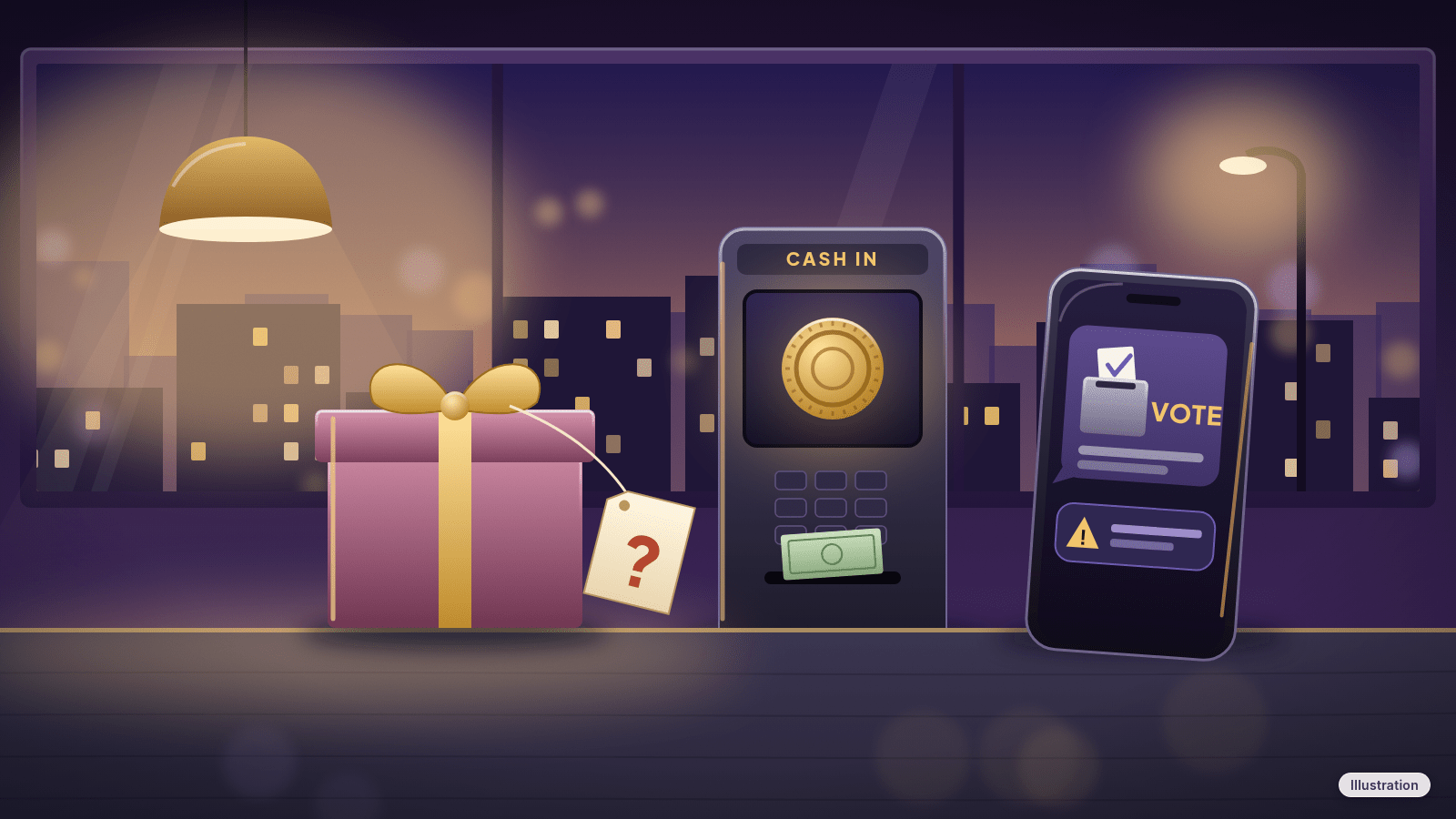
This week's scams all work by rushing you. One is a website that somehow has the sold-out hot toy in stock. Another starts with a stranger on the phone who wants you to feed cash into a machine at a gas station. The third is a text claiming you aren't registered to vote.
Scammers pretend to be real banks, stores, campaigns and agencies, and a name you know in a message doesn't mean the real company sent it. Don't tap links in messages you weren't expecting. Go to the company's site or app yourself. Forward scam texts to 7726 (SPAM), and report scams at ReportFraud.ftc.gov.
1. Fake stores selling this year's sold-out gifts
If you're hunting for a sold-out toy or gift this year, like the Nintendo Switch 2, Squishmallows or something else on the hot-toy lists, you're the target. You search for the toy or spot an ad in your social feed, and it takes you to a site that looks professional and somehow has it in stock, sometimes at a discount.
Example: "FLASH SALE: Switch 2 back in stock, 40% off today only! Limited units left. Shop now."
Some buyers get a cheap fake. Others get nothing, and the site disappears or changes its name. One shopper ordered a Switch 2 from what looked like an online furniture store and didn't get it. Another clicked the top search result for Squishmallows and canceled their debit card after it was declined twice at checkout.
A price that seems too good to be true is a red flag, and so is a "flash sale" or "last-minute deal" on something that's sold out at the big stores. So is a store that doesn't usually sell that kind of product, or one with no working customer service number.
If you do one thing, type the address of a store you already trust into your browser instead of tapping the ad or search result. Buy from sellers you know and trust. Before you enter your name, address or card number on an unfamiliar site, check that it has a customer service number that works. If a site shows a Better Business Bureau (BBB) seal, confirm it at BBB.org.
If you already paid:
- Call your card company or bank right away. Use the number on the back of your card, or use its app. Ask for the money back.
- If you paid with a payment app, report it in that app and ask them to reverse the payment.
- Report the site to ReportFraud.ftc.gov and BBB Scam Tracker.
Alert date: Oct. 6, 2026.
2. The caller who wants your cash in a crypto ATM
Hang up. Real banks, companies and government agencies don't ask you to put cash in a crypto ATM, so treat any request like that as a scam.
Example: "This is your bank's fraud team. Your account has been compromised. To protect your savings, withdraw the cash and deposit it at the Bitcoin ATM nearby. Stay on the line with me."
It starts with a call, text or email claiming your bank account is frozen or a family member is in trouble. The person tells you to take out cash and put it into a crypto ATM, a kiosk that turns cash into cryptocurrency (digital money that's hard to trace or get back). You'll see them in gas stations and convenience stores. The scammer often stays on the phone the whole time and may send you a QR code (a square barcode) to scan at the machine. That code sends the money straight to them.
Anyone with a phone or a social media account can get hit. Older adults are hit often, and Gen Z (people in their teens and 20s) is increasingly targeted on Twitch, TikTok and Instagram. The same crowd also runs fake trading apps and "investment mentors" who build trust before they ask for more money. After you lose money, a "recovery expert" may offer to get it back for an upfront fee. That's often the same scammers coming back for more.
Any one of these should stop you:
- Anyone telling you to pay with crypto or use a crypto ATM to "protect" your money
- A caller who wants to stay on the line while you make the deposit
- A QR code sent to you to scan at the machine
- Promises of big, sure returns
- An upfront fee to "recover" money you already lost
Before you send money, pause and talk to someone you trust. Call the bank or company yourself, using its official website, app or the number on your card. On social apps, keep your friends list, photos and posts private so scammers can't see who you know. And don't let anyone you don't know well take over your phone or computer remotely.
If you already paid:
- Contact the crypto ATM operator or crypto exchange (the company or app you used to buy or send the crypto) right away. Tell them it was a fraudulent transaction and ask them to reverse it. Crypto payments are hard to get back, so move fast.
- If the cash came from your bank, tell your bank too.
- Report it to ReportFraud.ftc.gov and the FBI at ic3.gov. In California, you can also report it at oag.ca.gov/report. In other states, you can report it to your state attorney general.
- Ignore anyone who offers to "recover" your money for a fee.
Alert date: Oct. 19, 2026.
3. Fake election texts, donations and "you're not registered" messages
Example: "ALERT: Our records show you are NOT registered to vote. Confirm your registration within 24 hours or lose your vote: [link]"
This one targets voters across the country ahead of the Nov. 3 midterm election. A text or email like the example links to what looks like your state's voter registration page. It's a fake page built to steal your personal details. Don't use the link. Check your registration yourself at vote.gov or with your local election office.
Other versions go after your money. They ask you to donate to a campaign or committee the scammers don't work for, sell campaign gear that doesn't ship, or promise your donation will pay you back if the candidate wins. Campaign donations aren't an investment, so any promise that a donation will grow or be paid back is a red flag. Some scammers use AI to make a fake voice, image or message that seems to come from a real candidate.
Watch for a message you didn't ask for that claims there's a problem with your registration, or a request for your Social Security number, birth date or bank details to "verify" you or claim a survey prize. Pressure to donate right now through a link in a text is another giveaway. So is a text telling you that you can vote by text. States don't sign voters up over the phone either, so treat a call offering to register you as a red flag.
To donate, type the candidate's or party's official website into your browser yourself. Before you give to a political committee (a group that raises money for candidates or causes), look it up on the Federal Election Commission site, fec.gov, and be careful if it reports high fundraising or "consulting" costs. On the donation page, check for a box that turns on repeat charges.
If you already clicked or paid:
- If you donated or entered card details, call your card company or bank using the number on your card.
- If you shared your Social Security number, go to IdentityTheft.gov for a recovery plan.
- Report it to the FBI at ic3.gov or your local FBI field office, and to BBB Scam Tracker. Forward scam texts to 7726 (SPAM).
Alert dates: Oct. 15, 19 and 24, 2026.
References
- BBB: BBB Scam Alert: Looking for this season's hot toy? Beware of scams
- California Attorney General: Crypto Scams are Booming: Attorney General Bonta Clocks Crypto Conmen
- California DFPI: Crypto ATM Scams: Don't Let Fraudsters Drain Your Wallet
- FBI IC3: Scammers Exploit 2026 U.S. Midterm Election to Perpetrate Multiple Fraud Schemes
- ABC11: BBB warns voters about political text scams ahead of election
- Chattanooga Times Free Press: Business Bulletin: BBB warns of political scams as elections get underway
- FTC: What To Do if You Were Scammed
- FTC: How to Recognize and Report Spam Text Messages