
On this page · 6 sections
Ninety-eight years ago today, on Tuesday, Nov 6, 1928, the U.S. Patent Office granted Jacob Schick of Stamford, Connecticut, patent No. 1,690,133 for a “Shaving Implement.” The paper did not sell a lifestyle. It described a tool that could cut face hair while the skin stayed comparatively dry — no mug of hot water, no lather ritual, no disposable blade that had to be swapped by hand.
Today is Friday, Nov 6, 2026. That patent turns 98.
A colonel who hated shaving in the cold
Schick was a retired Army officer before he was a bathroom-shelf name. He had served in the Philippines, recovered from dysentery, and later helped string more than a thousand miles of military telegraph line into interior Alaska. After he left the Army in 1910, he went looking for gold in Alaska and British Columbia.
The cold made ordinary shaving miserable. Hot water was hard to keep. Fingers went numb. A steel blade against a frozen face was a daily risk he disliked enough to keep thinking about.
Then he broke an ankle on one of those trips and had to sit in camp for weeks. With time on his hands and a stubbly beard, he sketched a dry shave: a cutting head driven by a flexible cable from an external motor about the size of a grapefruit. Manufacturers looked at the bulky idea and turned it down. World War I pulled him back into uniform as a lieutenant colonel. The dry-shave drawings waited.
Blades that reload like a rifle, then a second bet
After the war, Schick still needed cash to chase the electric idea. So he borrowed a trick from repeating firearms and built a wet-shave safety razor that held blades in a clip magazine. You could load a fresh edge without touching the steel. In the mid-1920s he started the Magazine Repeating Razor Company around that design. The product sold. It was not the invention he cared about most.
In 1928 he sold that razor business’s assets so he could put the money into the dry electric shaver. That was not a small house bet. He was trading a working blade product for a plug-in machine shoppers had never asked for by name.
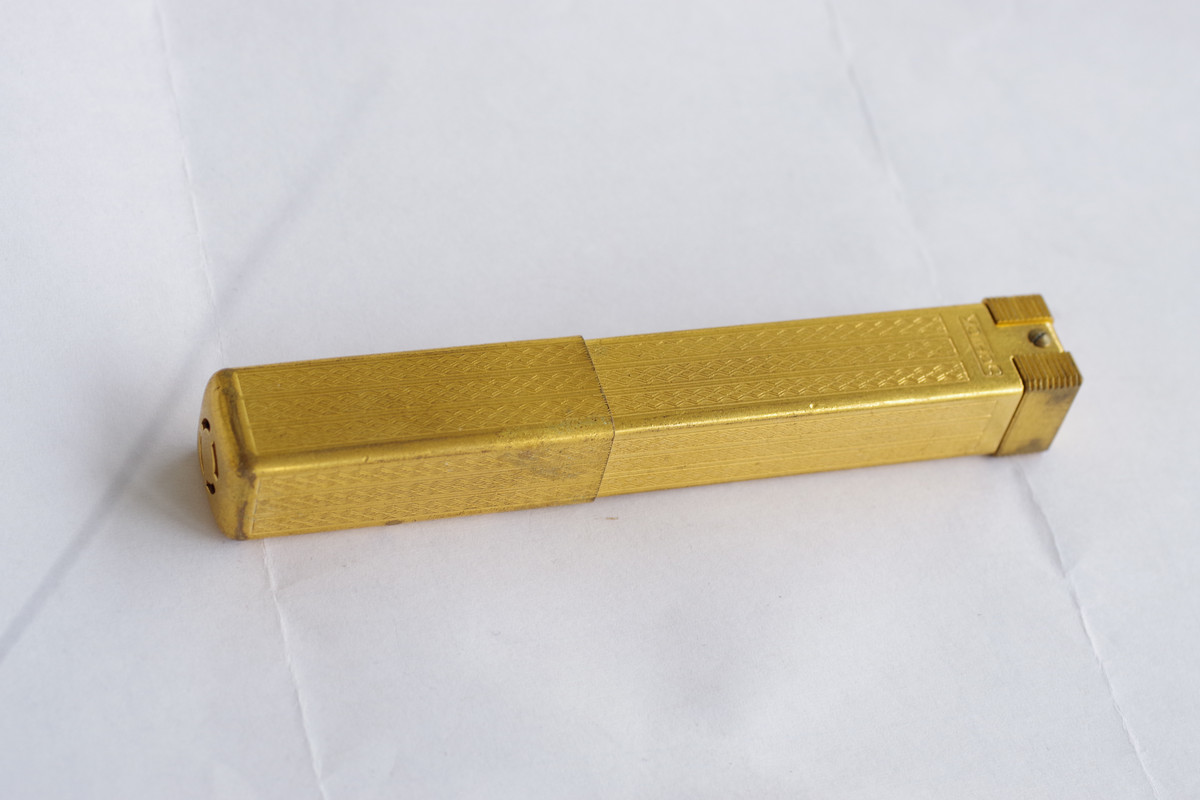 A Schick Magazine Repeating Razor, the blade-clip wet shaver Schick sold to fund the dry electric machine. Photo: Radler22, CC BY-SA 4.0, via Wikimedia Commons.
What the Nov 6 patent actually covered
The 1928 patent is easy to oversimplify into “he invented the electric razor that day.” The document itself is more interesting than the slogan.
Schick’s “Shaving Implement” was built to snip hairs through tiny openings in a face plate. Two plates slid against each other so opposing edges nipped the hair. Skin could not squeeze into the gap the way it can under a loose blade. One form of the invention used suction to pull cut hairs away and hold the skin close. Another form drove the sliding plate through a short, rapid stroke linked by a flexible shaft to a motor.
In plain language: a dry face, no lather required, and a path to power the cut with electricity instead of a hand-stropped edge. Smithsonian historians later pointed to that same Nov 6 grant when they traced how Schick’s dry approach differed from King Gillette’s cheap replaceable blades. Gillette had solved the blade problem. Schick was trying to leave the wet mug behind.
He kept refining the machine. On May 13, 1930, he received a second key patent — No. 1,757,978, “Shaving Machine” — for a hand-held dry shaver with a shear plate and cutter sized to nip hair close without biting skin. Early versions still looked clumsy. The breakthrough customers could actually buy was the later hand unit: motor and shaving head in one Bakelite body, plugged into a wall outlet, kick-started with a little turn wheel.
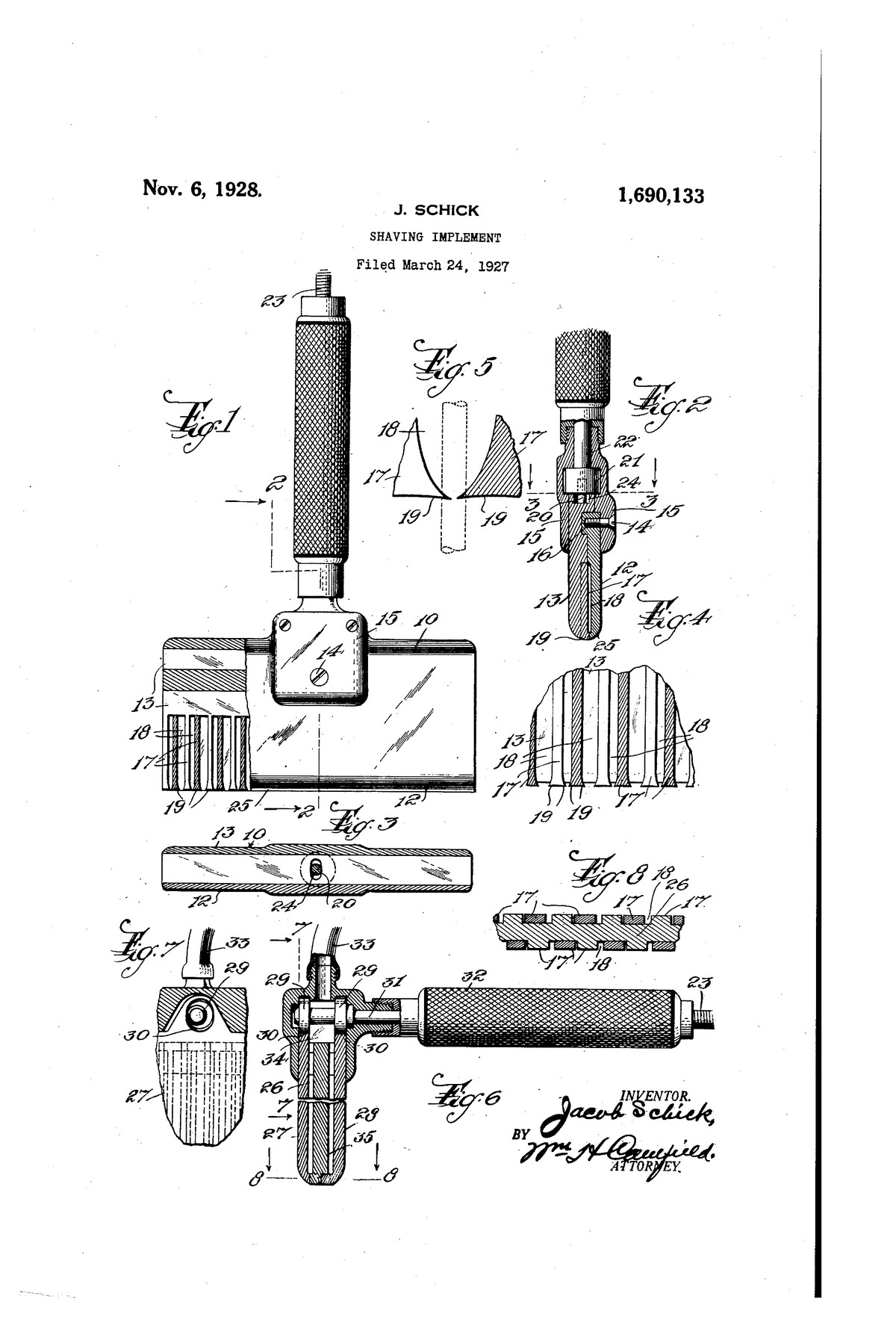 Drawing page from Schick’s Nov 6, 1928 patent No. 1,690,133 — the dry-shave implement with motor-driven snipping plates. Source: U.S. Patent and Trademark Office (public domain).
Stamford, $25, and a bathroom that did not need a mug
Schick Dry Shaver, Inc. took shape around 1930. He opened a factory in Stamford that employed about a hundred people. On March 18, 1931, the practical plug-in dry shaver went on sale in New York City for $25 — serious money in the early Depression, on the order of a few hundred dollars in today’s terms.
About 3,000 sold the first year. That is not a stampede. It is a foothold. Competitors such as Remington and others eventually piled in. Prices fell. The close shave was never quite the wet-blade ideal the ads promised, but the convenience was hard to argue with once you had tried a morning without heating water or handling a fresh edge.
By 1937, about 1.5 million of those dry shavers were already in people’s hands. Schick’s name was on a category, not just a prototype sketch from a gold camp.
The brand kept moving after him. The Stamford factory story runs through later corporate names — Schick, Inc., and, decades on, Norelco operations on the same Stamford ground where the electric-shaver plant had stood. The bathroom shelf forgot the flexible cable and the grapefruit motor. It kept the dry hum.
The camp that could not heat the water
Schick died in July 1937 in New York, at 59, after kidney trouble. He had lived long enough to watch the dry-shave idea leave the patent drawings and fill real medicine cabinets. He had once claimed a man who shaved correctly every day might live to 120. He got less than half of that. The machines outlasted the boast.
The whole line of plug-in dry shavers — the ones that buzzed through the Depression, the ones that later filled drugstore aisles under his name and under rival badges — traces back to a man stuck in a cold camp with a bad ankle, trying to figure out how to shave when hot water would not stay hot and numb fingers made a blade dangerous. Ninety-eight years after the patent office stamped Nov 6, 1928 on that dry-face implement, the answer is still sitting by millions of sinks: a small motor, a dry face, and no mug required.
Today's cheat code: if your everyday gadget lives on a charger, these charging myths are worth sorting from the real advice — Phone Charging Myths: What's Real, What's Fake and the Best Way to Charge.
Enjoyed this? Follow Tech Cheat Codes on TikTok for quick tech tips: Follow on TikTok. Or open TikTok and search "Tech Cheat Codes".
References
- Source: U.S. Patent 1,690,133, Jacob Schick, “Shaving Implement,” granted Nov 6, 1928 (filed March 24, 1927; dry shave without lather; snipping plates; motor/flexible-shaft drive; suction form)
- Source: U.S. Patent 1,757,978, Jacob Schick, “Shaving Machine,” granted May 13, 1930 (filed April 23, 1928; hand-held dry shaver shear plate and cutter)
- Source: Connecticut History / CTHumanities, “Jacob Schick Invents the Electric Razor – Today in History: May 13” (Alaska/BC gold injury recuperation; grapefruit-sized external motor; Magazine Repeating Razor Co.; sold assets 1928 to fund electric; Schick Dry Shaver Inc. 1930; Stamford factory ~100 workers; later Norelco on same Stamford ground)
- Source: Smithsonian Lemelson Center, “Get That Clean Baby-Faced Look: Razors” (Nov 6, 1928 patent No. 1,690,133 dry shave without lather; snipping; suction; contrast with Gillette replaceable blades)
- Source: WIRED, Randy Alfred, “March 18, 1931: The Schick Hits the Fans” (Alaska telegraph work; 40-below shaving; ankle injury camp sketches; Magazine Repeating Razor; integrated Bakelite hand unit; NYC sale March 18, 1931 at $25; ~3,000 first year; ~1.5 million by 1937; 120-year lifespan claim)
- Source: The Hindu / A.S. Ganesh, “Schick sticks to his ideas” (March 18, 1931 NYC sale; Stamford factory ~100; $25; ~3,000 year one; ~1.5 million by 1937)
- Source: TIME archive, “TRADE: Shavers Cut” (Alaskan gold prospector ankle; first hand-made models $25 in 1931)
- Source: New York Times archive headline abstract, “Col. Jacob Schick, Inventor, 59, Dies” (July 3, 1937 death; Presbyterian Hospital; dry shaver inventor)