On this page · 3 sections
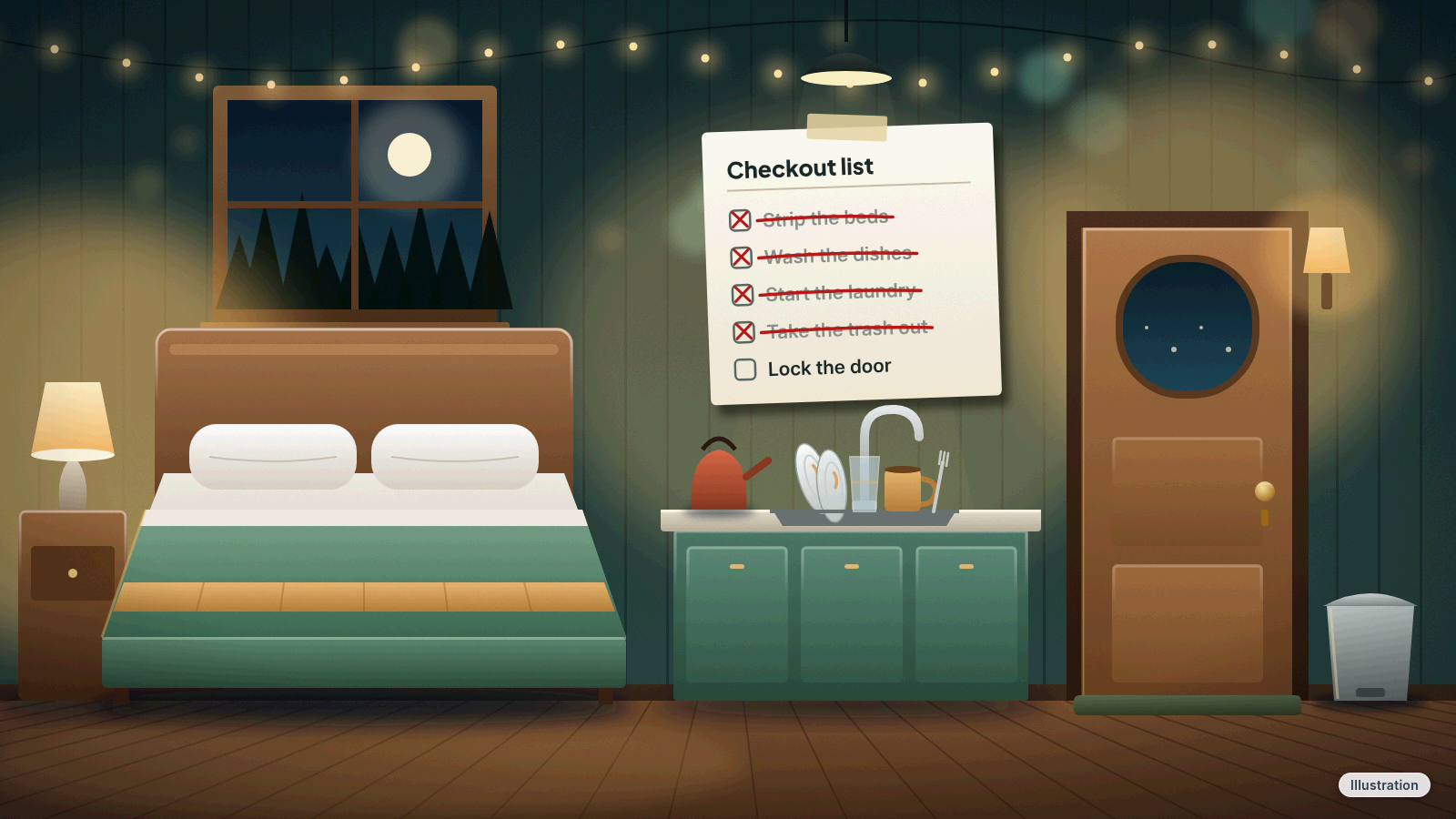
What happened: Airbnb rewrote its rules for what hosts can ask of guests. For reservations booked on or after November 20, 2026, hosts generally can't ask you to strip the bed, wash and put away dishes or take the trash off the property before you leave. They also can't charge fines, make you sign a separate contract in most cases or add new rules after you book.
What this means for you: If you book an Airbnb on or after Nov. 20, every rule you're expected to follow has to be listed in one place before you pay, and checkout chores mostly shrink to small favors. A trip you've already booked, or book before Nov. 20, still falls under the old rules. That includes plenty of Thanksgiving trips being booked right now. Hosts have homework. Listings need to be cleaned up before the 20th.
The details
The long checkout list is the change most guests will notice. Leaving a rental can mean running the dishwasher, starting a load of towels and dragging bags of garbage to a dumpster down the street before you even load the car. Under the new policy, hosts generally can't ask guests to do tasks that take significant effort or time, or that a cleaner would normally handle.
Small requests are still fine. Here's where Airbnb draws the line, using its own examples:
| Chore | Generally not allowed | Still OK to ask |
|---|---|---|
| Dishes | Washing and putting them away | Putting used dishes in the sink |
| Laundry | Stripping the sheets or starting a load | Gathering used towels |
| Trash | Taking it off the property | Sorting trash and recycling into the indoor bins |
| Heating and cooling | Asking you not to use a listed amenity like the AC | Turning it off when you leave |
There are sensible exceptions. A host in bear country can ask you to use an animal-proof trash container, and a host in an area under drought restrictions can ask you to limit shower time.
These "asks" now live in a section called Requests, and there's a difference between a request and a rule. Guests have to follow house rules. Requests are things guests are encouraged to do, which is a softer standard. Checkout instructions, which used to get their own tab in the listing, now sit under Requests along with everything else a host would like you to do during the stay or before you head out.
House rules themselves are being boiled down to seven standard ones: maximum overnight guests, quiet hours, events, pets, smoking (which now includes vaping and e-cigarettes), commercial photography and locking up at checkout. Maximum guests and lock-up are new to the list. Hosts can also say whether they allow all, some or none of Airbnb's add-on services.
No fines, no surprise rules
Fines and penalties are generally out. If a guest damages something, the host goes through AirCover, Airbnb's host protection program, instead of charging a penalty. Hosts can still warn you about fines that a homeowners association (HOA) or local government might charge, as long as that warning sits in the house rules section.
Fees work the same way. Any fee for something the listing advertises has to be part of the price you see when you book. A host can mention optional extras, like breakfast, but can't tack on a charge for something the listing already promises.
The rules also have to be listed before you book, in that one designated section. A host can't add new ones afterward by message, with a sign taped inside the door or in person at check-in. They also have to match what the listing advertises, so a host can't advertise a hot tub and then ban you from using it.
Separate contracts are mostly gone too. Hosts can upload one only for a few reasons, such as a legal requirement, HOA rules, a rental agreement for a monthly stay, an Airbnb Luxe stay or optional extras like a golf cart. Airbnb doesn't enforce those contracts itself. Hosts also can't ask for personal information such as a copy of your government ID, except where the law requires it or in a few limited cases.
None of this means anything goes. If a guest breaks a house rule, or makes clear before check-in that they plan to, the host can cancel the reservation without paying a cancellation fee.
How Airbnb is enforcing it
Airbnb started showing the new rules setup to hosts on Oct. 20, a month before the policy takes effect. Requests that break the policy get highlighted in the Listing editor, and hosts get an email with tips plus a way to appeal. Guests may see an alert on a listing, such as one noting that it "includes cleaning requests."
A host who keeps breaking the policy starts with education, update requests and warnings. If the problem continues, Airbnb can post a notice on the listing, show it lower in search results or take other action.
Our read: the lower search ranking is the part hosts should take seriously. For a small rental business, showing up lower in search costs bookings.
What to do now
If you're a guest, open the listing's House rules section before you book and read the Requests below it. After you book, the same rules show up in your booking terms, in Airbnb's reminder emails and in the Trips tab. Our read: for a trip booked on or after Nov. 20, a new rule that shows up by text or on a note in the kitchen isn't one the policy lets a host add, so you can point the host back to the listing. For anything booked before then, ask the host about checkout chores ahead of time if it matters to you.
If you're a host, update your listing on a computer like this:
- Click Listings and choose the listing you want to change.
- Open the Listing editor and click House rules and requests.
- Click Add house rule, or click an existing rule to edit it, then click Save.
- For checkout chores, go to Requests, click Add requests, choose During the stay or Before checkout, add what you'd like and click Save.
Keep every rule in that section. Rules sent in messages or posted on signs don't count. Look for anything the Listing editor highlights, too, since flagged requests that aren't fixed get further review.
Changes you make now apply only to future reservations, not to bookings that are already pending or confirmed. The new policy covers every reservation booked on or after November 20, 2026.
References
Never miss a cheat code
Get a new 60-second fix every day: follow on TikTok, YouTube or Instagram.
Related fixes
How to Turn On Two-Step Verification for Google, Apple, Microsoft, Facebook, Instagram and Amazon
Add a second sign-in step to Google, Apple, Microsoft, Facebook, Instagram and Amazon: pick an app, text code or passkey, then save your backup codes.
Accounts & Security · 11 min read
Is This a Scam? 4 Warning Signs and What to Do Next, for Parents, Kids and Grandparents
Is this a scam? Learn the FTC's 4 warning signs, spot the tricks aimed at kids, teens and grandparents, and know exactly who to call if you already paid.
Scams · 6 min read
Phone Battery Draining Fast? Free Fixes for iPhone and Android
Phone battery dying by lunch? Find what's draining it and fix it free on iPhone, Pixel or Samsung Galaxy before you pay for a new battery or phone.
Phones & Storage · 5 min read