On this page · 3 sections
What happened: DoorDash agreed on Thursday, Oct. 29, to buy Instacart for about $17 billion, or $65.00 for each Instacart share. The deal is not expected to close until the end of 2027 or the first half of 2028.
What this means for you: Nothing changes in your Instacart or DoorDash app today. The two companies keep running separately until the sale closes. If you pay for both DashPass and Instacart+, DoorDash's goal after the sale closes is one membership fee instead of two. No price for that has been announced, and nothing is decided for members today.
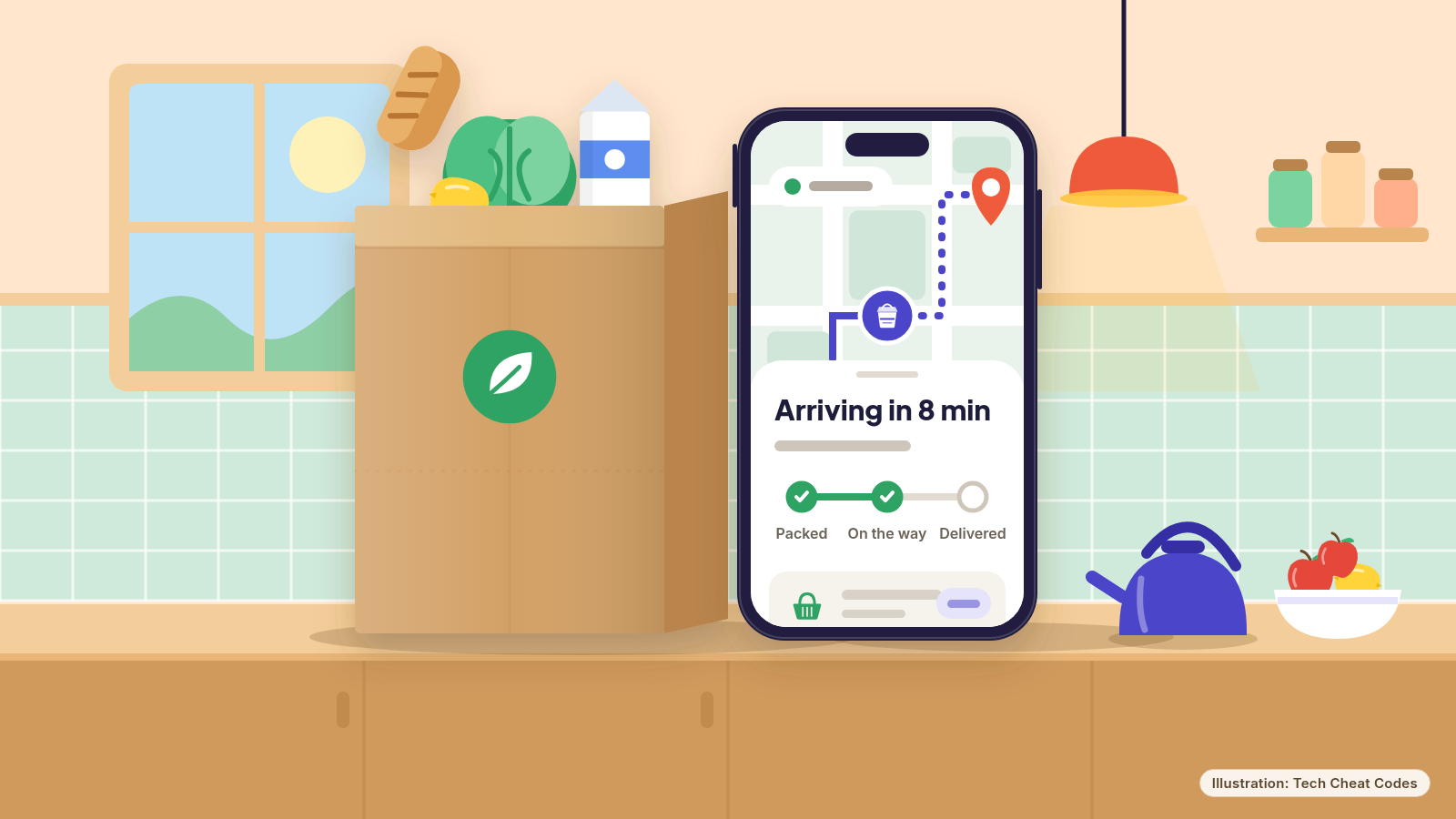 Groceries and takeout could soon come from the same company. Illustration: Tech Cheat Codes
The details
Two big names in home delivery have agreed to combine. Families use Instacart for the big weekly shop and DoorDash for meals and nearly anything else from their neighborhood. If the sale closes, one company would run both apps.
Here is the deal in numbers.
| Item | Detail |
|---|---|
| Buyer | DoorDash, Inc. |
| Company being bought | Instacart (Maplebear Inc.) |
| Price | $65.00 for each Instacart share |
| Premium | 26% above Instacart's Oct. 22, 2026 closing price |
| Total equity value | About $17 billion |
| Payment | At least 75% cash; DoorDash stock capped at 25% |
| Instacart board | Approved the agreement unanimously |
| Expected close | End of 2027 or first half of 2028 |
| Approvals still needed | Instacart stockholders, U.S. antitrust waiting period, and regulators in Canada and Israel |
| Early support | Stockholders holding about 19% of Instacart shares agreed to vote in favor |
The sale can still fall through if regulators or Instacart stockholders do not approve it. Until it closes, DoorDash and Instacart remain separate, independent companies.
What stays the same for now
Nothing changes today about how you shop with Instacart. You order the way you did last week. Instacart shoppers accept and deliver orders the way they did last week.
What DoorDash expects after the sale closes
DoorDash laid out several commitments and expectations for after the sale closes.
- Instacart stays. DoorDash is expected to keep Instacart's brand, its enterprise technology products and its app.
- More stores to pick from. Instacart customers could shop at more than 50,000 additional stores, on top of the nearly 100,000 stores on Instacart today.
- One membership fee. The goal is for members of both DashPass and Instacart+ to pay one fee instead of two. That would save members an estimated $100 million per year in total, a DoorDash estimate.
- No grocery exclusivity. Local grocers can work with any delivery platform they choose.
- Shoppers keep their flexibility. Instacart shoppers can keep choosing how much they work and which batches they accept. They can also decide whether to take DoorDash orders or keep shopping only on Instacart.
| Today | Planned after the sale closes | |
|---|---|---|
| Instacart app | Runs on its own | Expected to stay |
| Stores on Instacart | Nearly 100,000 | Could add more than 50,000 more |
| DashPass and Instacart+ | Two separate memberships | Goal: one fee instead of two |
| Instacart shoppers | Instacart orders | Can take DoorDash orders if they choose |
Our read: "one fee instead of two" is the line many households will care about, and it comes with no price tag. A single fee could be lower than both memberships added together, or it could land somewhere that suits the company more than you. Until a price appears, treat it as a plan, not a deal for you.
What it means for stores and small shops
The companies present the deal as a way to help local stores win. Their argument is that the biggest online retailers and grocers build their own delivery fleets, warehouses and apps, and that a grocer running on thin margins can't build all of that alone. The pitch is that a neighborhood store could use Instacart's grocery and ordering technology on its own website, plus DoorDash's delivery network and its DashMart Fulfillment Services for extra capacity on online orders.
For a small grocery owner, a few points stand out:
- Today, nothing changes about who delivers for you. The companies stay separate until the sale closes.
- DoorDash's "no grocery exclusivity" commitment says local grocers can work with any delivery platform they choose after the sale closes.
- The tools described, such as your own ordering website and advertising on the apps, are plans for the combined company. None of it is available as a combined product today.
What Instacart+ costs today
Instacart+ is $99 a year or $9.99 a month (price as of ; official source (opens in a new tab)). Members get $0 delivery fees on grocery and retail orders of $10 or more, on Costco orders of $35 or more and on eligible restaurant orders of $25 or more. Service fees still apply. You also get Peacock and New York Times Cooking with the membership.
DashPass gives members $0 delivery fees and reduced service fees on eligible orders at participating merchants. Look for the purple DashPass icon under a store's name. DoorDash lists live DashPass pricing on its plans page.
What to do now
- Keep ordering as usual. There is no new setup, no new app and nothing to approve.
- Check what you pay for. Open the Instacart menu (the three lines in the upper left corner) and choose Your Instacart+ Membership to see your plan. In DoorDash, open Manage DashPass and check Billing History.
- Hold off on canceling either one over this news. The combined fee has no price yet, and the companies stay separate until the sale closes, which is not expected before the end of 2027.
- Read notices from either company. Watch your email and app messages for membership news.
- If you work as an Instacart shopper, the company's shopper community page covers what the news means for you today: no immediate changes to how you accept or deliver orders.
- If you run a grocery store or small shop, keep your current delivery setup. The combined tools are plans for after the sale closes.
One next step is a registration statement DoorDash plans to file with the SEC, which will include more detail on the deal.
References
Never miss a cheat code
Get plain-English tech fixes and scam alerts: follow on TikTok, YouTube or Instagram.
Related fixes
How to Turn On Two-Step Verification for Google, Apple, Microsoft, Facebook, Instagram and Amazon
Add a second sign-in step to Google, Apple, Microsoft, Facebook, Instagram and Amazon: pick an app, text code or passkey, then save your backup codes.
Accounts & Security · 11 min read
Is This a Scam? 4 Warning Signs and What to Do Next, for Parents, Kids and Grandparents
Is this a scam? Learn the FTC's 4 warning signs, spot the tricks aimed at kids, teens and grandparents, and know exactly who to call if you already paid.
Scams · 6 min read
Phone Battery Draining Fast? Free Fixes for iPhone and Android
Phone battery dying by lunch? Find what's draining it and fix it free on iPhone, Pixel or Samsung Galaxy before you pay for a new battery or phone.
Phones & Storage · 5 min read