
On this page · 6 sections
The paper wouldn't stay flat.
In the summer of 1902, the Sackett & Wilhelms printing plant in Brooklyn had a problem nobody could print their way out of. High humidity was warping the paper and making the ink run, and the print quality was suffering for it.
The man they got to fix it was a 25-year-old engineer from the Buffalo Forge Company named Willis Carrier. He had been born on Sunday, Nov 26, 1876, on a dairy farm in Angola, New York, just outside Buffalo. He was his parents' only child, and he went to a one-room schoolhouse.
A pot of apples
Carrier was not a natural at math, at least not at first. When he was 9, fractions stumped him. His mother helped him master the idea with a pot of apples. He later called it "the most important thing that ever happened to me," and he kept using that trick for the rest of his life: break a hard problem into pieces you can hold.
Money was tight. During the Panic of 1893, a nationwide money crisis, he stopped his own schooling for a while and taught other students to help support the family. Then he went back, finished at Buffalo's Central High School and won a scholarship to Cornell University. Between semesters he sold stereoscopes and viewing cards door to door. At Cornell he and a partner started a laundry business for students. He graduated in 1901 with a degree in mechanical engineering.
Buffalo Forge hired him to draft plans for heating systems and for drying lumber and coffee. The pay was $10 a week.
Cold air that also dries
The printer's trouble was not really heat. It was water vapor in the air, the thing we call humidity. Carrier's idea was that if he could control how much water the air held, he could control the paper, and he could get temperature along with it.
To do the math, he used a slide rule, a hand calculating tool with sliding scales, to work out the dew point. That's the temperature at which water vapor in the air turns into droplets, the same thing that fogs a cold glass on a summer porch. Chill air below its dew point and water drops out of it. What's left is cooler and drier.
On Thursday, July 17, 1902, the design drawing went to Sackett & Wilhelms. The system moved air over cooling coils to pull the moisture out of it. Carrier Corporation and the National Inventors Hall of Fame both treat that Brooklyn plant as the first modern air-conditioning installation, because it controlled temperature and humidity together. Six weeks after the drawing was submitted, on Friday, Aug 29, 1902, Carrier married Edith Claire Seymour, a fellow university student, in Angola.
The name came a little later. Carrier's company credits a textile engineer named Stuart Cramer with using the phrase "air conditioning" in 1906 for a process that controlled humidity in cotton mills. The name stuck to Carrier's work anyway.
The patent, then the formulas
Carrier filed a patent application on Friday, Sept 16, 1904, for an "Apparatus for Treating Air." It was granted on Tuesday, Jan 2, 1906, as U.S. Patent 808,897, and assigned to Buffalo Forge. The patent describes air pushed by a fan through a fine water spray, then through a set of baffle plates that catch the droplets and the dirt in them. Its stated goal was a machine that would clean the air "either with or without altering its temperature and humidity."
That same year, Buffalo Forge sold the system to Chronicle Cotton Mills in Belmont, North Carolina, which hooked it into the mill's fan and heating system. Carrier's own history counts the textile industry among the earliest and most enthusiastic users of modern air conditioning.
In 1911, Carrier presented his "Rational Psychrometric Formulae" to the American Society of Mechanical Engineers. Psychrometrics is the study of how heat and moisture behave in air. Before that paper, designing these systems involved a lot of guesswork. The National Inventors Hall of Fame describes the formulas as still standing as the basis for the fundamental calculations in the air-conditioning industry.
In 1914, a Carrier system went into the Charles Gates mansion in Minneapolis, the first home to get Carrier air conditioning. The next year, Carrier, his future business partner J. Irvine Lyle and five fellow Buffalo Forge engineers launched the Carrier Engineering Corporation, with $35,000 in starting capital.
From factories to everybody
The early customers were factories and mills. Cooling people for comfort came later, and it needed a better machine. In 1922, Carrier unveiled the first centrifugal chiller, a big refrigeration machine that opened the door to air conditioning on a large scale. The National Inventors Hall of Fame describes it as the first safe, low-pressure centrifugal machine using a nontoxic, nonflammable refrigerant, and credits it with starting the era of comfort cooling.
After that, cool air moved into places people actually spent their summers. The "new" Madison Square Garden in New York opened in 1925 with Carrier chillers cooling the crowd and making the ice for pro hockey. In 1928, the Milam Building in San Antonio became the first skyscraper to put in comfort cooling while it was being built. Carrier won the contract for both chambers of Congress, with equipment going into the House in 1928 and the Senate in 1929. At the 1939 World's Fair in New York, nearly 1.3 million people visited the company's "Igloo of Tomorrow" in its first 100 days.
Carrier died on Saturday, Oct 7, 1950, during a trip to New York City, about seven weeks before his 74th birthday. He was inducted into the National Inventors Hall of Fame in 1985.
Your phone runs its own little climate control
Carrier's printer cared about one thing: keeping the conditions steady enough for the machine to do its job. The phone in your pocket is built around the same worry.
Apple designs iPhone and iPad to work where the surrounding air is between 32°F and 95°F (0°C and 35°C), and to be stored between -4°F and 113°F (-20°C and 45°C). Apple warns that a parked car can get hotter than that. When the inside of an iPhone gets warmer than its normal range, it tries to regulate its own temperature to protect its parts. Charging can slow or stop, the display can dim, the cell signal can weaken as the radios drop into a low-power state, and some apps run with lower frame rates. Past a certain point, the phone puts up a temperature warning screen until it cools off. Cold has its own effects: battery life can drop for a while, and the phone can turn itself off.
The phone manages heat by doing less until it cools down. The idea is the one Carrier sold to a Brooklyn printer in 1902: keep the air and the machine inside the range they were built for, and the work comes out right.
Want more stories like this? Follow Tech Cheat Codes on Facebook. Tap this link, then tap Follow: Follow Tech Cheat Codes on Facebook
In 1998, Time magazine named Willis Carrier one of the 100 most influential people of the 20th century.
Reader comments
Ask us a question
Stuck on something in this story? Ask us, or leave a comment. Our team reads every message before it appears here.
Or email us at hello@techcheatcodes.com.
References
- Willis H. Carrier Biography, Carrier Corporation (williscarrier.com)
- Carrier History, Carrier Corporation
- Who Invented Air Conditioning? The History of Willis Carrier, Carrier Corporation
- US808897A, Apparatus for Treating Air, U.S. patent to Willis H. Carrier, filed September 16, 1904, granted January 2, 1906
- Willis Haviland Carrier, Inductee, National Inventors Hall of Fame
- Patent for the Air Conditioner Issued to Willis H. Carrier, Library of Congress
- If your iPhone or iPad gets too hot or too cold, Apple Support, published May 14, 2026
Get the next cheat code
Plain-English tech fixes and scam alerts. Tap Follow on Facebook or TikTok, or pick another below.
Related fixes
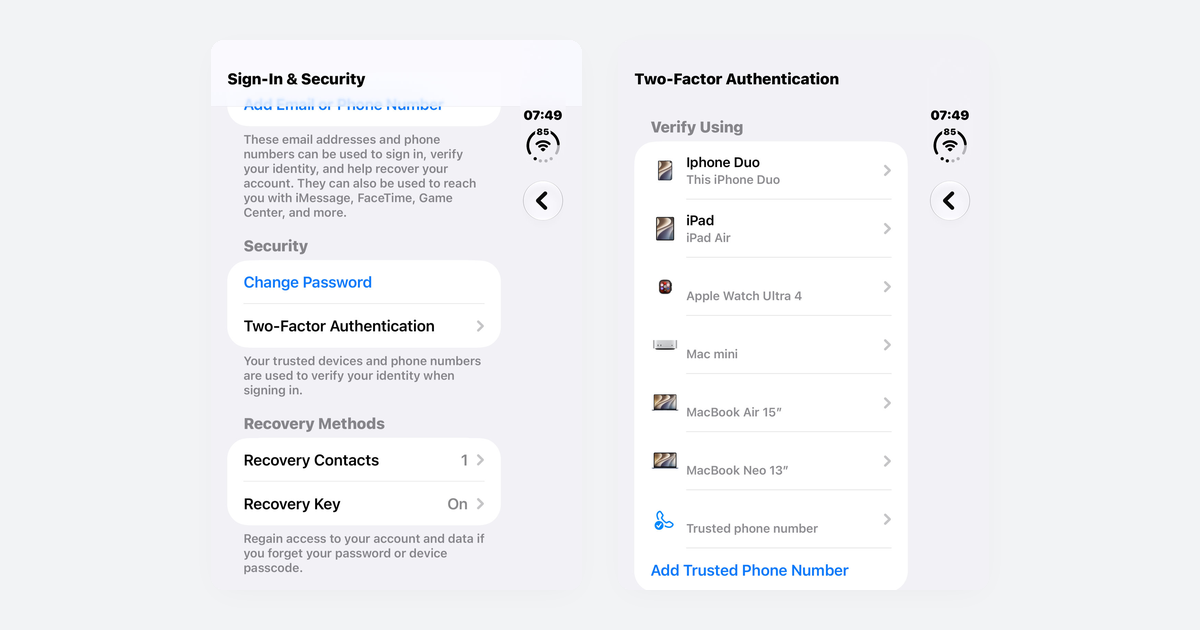
How to Turn On Two-Step Verification for Google, Apple, Microsoft, Facebook, Instagram and Amazon
Open each account's security settings, turn on two-step verification, and save backup codes plus a second way back in.
Accounts & Security · 14 min read
Is This a Scam? 4 Warning Signs and What to Do Next, for Parents, Kids and Grandparents
Watch for someone pretending to be trusted, a sudden problem or prize, pressure, and a request for gift cards, crypto, or a wire.
Scams · 8 min read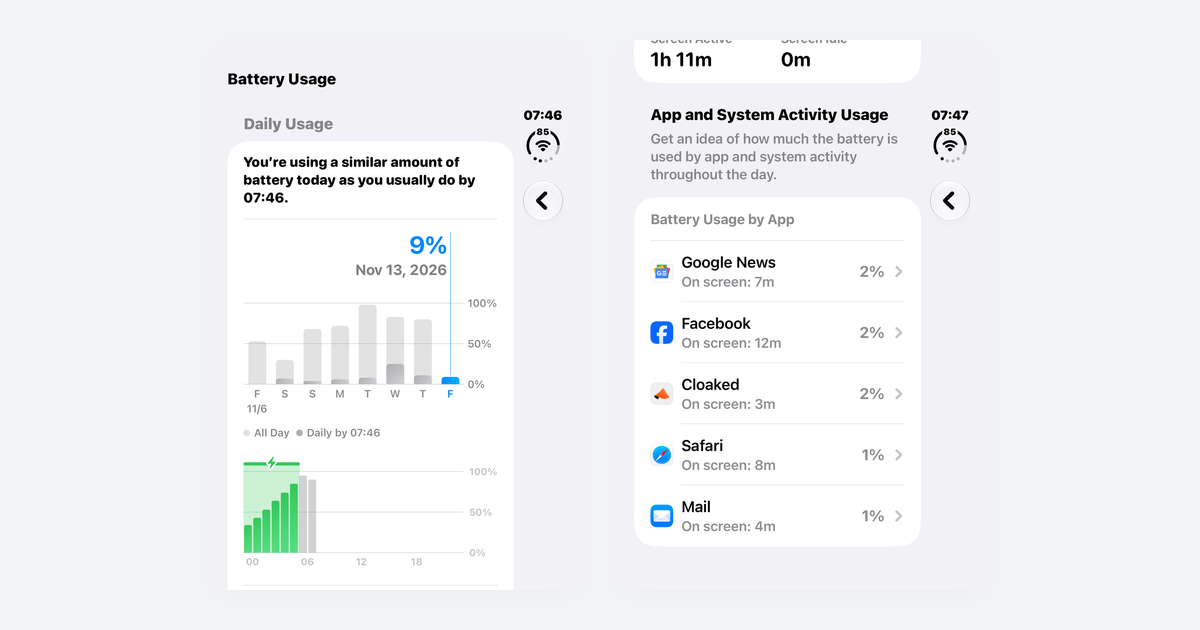
Phone Battery Draining Fast? Free Fixes for iPhone and Android
If you just updated, wait a few days; then check which app is using power, turn on battery saver, and dim the screen.
Phones & Storage · 10 min read