On this page · 4 sections
Some scammers no longer wait for you to wire the money. They send a person to your front door to pick up the cash. Las Vegas police warned about these "pickup scams" this week, and they are one of three scams to know before Black Friday on Nov. 27.
The other two hit your holiday shopping. Fake online stores, some built with AI to look like real ones, take your card number and ship nothing. And a gift card can be drained before it ever leaves the store rack. The FBI said online fraudsters stole more than $11 million last year from victims in Massachusetts, New Hampshire, Rhode Island and Maine alone.
This page has affiliate links. If you buy through one, we may earn a small commission at no extra cost to you. Learn more.
Get the free Scam Spotter card: five quick checks to print for the fridge.
iThis page has affiliate links. If you buy through one, we may earn a small commission at no extra cost to you. Learn more.
1. Fake online stores with Black Friday prices
Example: An ad shows a $499 TV for $89. The site looks just like a big store's, takes your card, and the TV never comes.
Criminals are using AI to build websites that mirror real ones, the FBI's Boston office said this week. Mario Fratantonio, an assistant special agent in charge there, told Boston 25 News on Nov. 17 that the fake sites advertise unbeatable deals. In New Hampshire alone, nearly 230 people lost more than $2.5 million to fraudsters last year, the FBI told WMUR.
"The fraudster is trying to create anxiety and trying to get you to move at a pace that's uncharacteristic to your habits," Fratantonio said.
State attorneys general sent the same warning. Missouri Attorney General Catherine Hanaway said fake stores may ship counterfeit goods or nothing at all, FOX 2 St. Louis reported on Nov. 20. South Dakota Attorney General Marty Jackley warned about look-alike websites on Nov. 18, Dakota News Now reported. His office said the "https" in a web address means the connection is encrypted, but it doesn't prove the seller is real.
Scammers also pay for ads, said Monica Horton, president of the Better Business Bureau (BBB) in Wichita Falls, Texas. She told KAUZ that some fake sites say your card isn't working and ask for another one, so they can steal more than one card number.
Any one of these should stop you:
- A price far below what every other store charges
- A store you found through an ad and have never heard of
- Spelling mistakes, or a web address that is a letter or two off from the real one
- A "card declined" message that asks for a second card
- A site that wants your Social Security number or bank account number to finish an order
If you do one thing, type the store's address into your browser yourself instead of tapping the ad. Pay with a credit card, not a debit card. Hanaway, Jackley and Horton all said a credit card gives you the most protection if something goes wrong.
If you already paid:
- Call your card company using the number on the back of your card. Ask to dispute the charge and get a new card number.
- If you made an account on the site, change that password, and change it anywhere else you used it. Our guide on what to do after you click a scam link walks through the first steps.
- Keep the order email, the web address and any receipts.
- Report it to the FBI at ic3.gov and to the FTC at ReportFraud.ftc.gov. In Missouri, you can also call the attorney general's hotline at 800-392-8222. In South Dakota, call 1-800-300-1986.
Alert dates: Nov. 17 to 20.
2. Gift cards drained before you give them
Example: You buy a $100 gift card at the store. Your niece goes to use it on Christmas morning and the balance is $0.
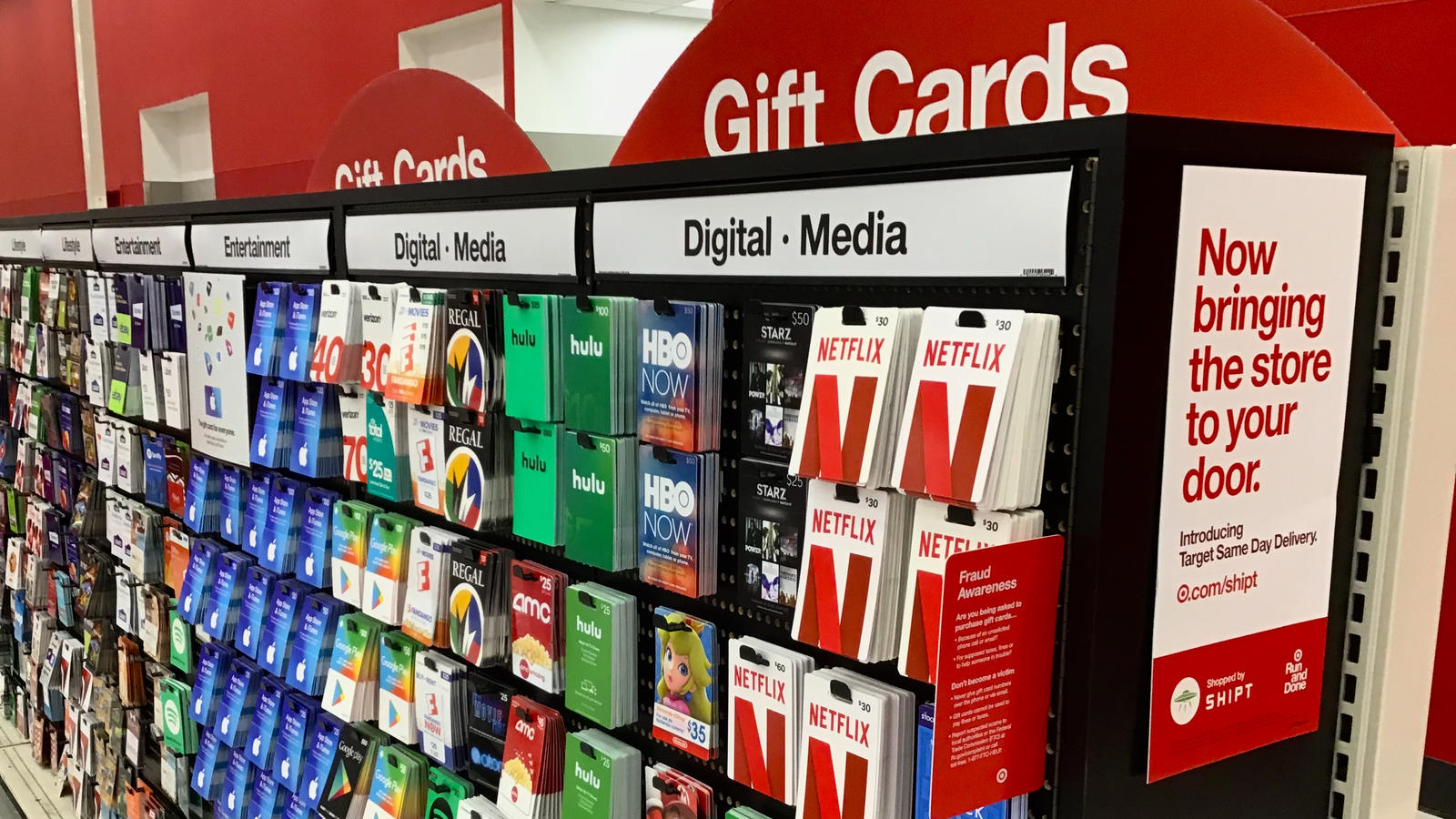
Gift cards are an easy present, and scammers get to them first. Some thieves use handheld scanners to copy card numbers from cards on the rack, then check the balance until someone pays to load it, the BBB said in tips published Nov. 17 in the Daily Advocate of Greenville, Ohio. Then they spend the money before you can.
Others stick a fake barcode over the real one. When the cashier scans it, your money goes onto the thief's card and yours stays empty, the FBI's El Paso office said. South Dakota's Jackley told shoppers this week to check the packaging and the strip over the card's code for tampering.
People in the U.S. lost $212 million to gift card and prepaid card scams in 2024, according to FTC figures cited by the BBB.
Before you buy:
- Take a card from the middle or the back of the rack, not the front. The FBI suggests this.
- Run a finger over the barcode. A sticker on top can feel raised.
- Check that the number in the little window on the back matches the number printed on the package.
- Don't buy a card with a torn, wrinkled or bent package, or a scratched PIN strip.
- Check the balance before you leave the store, and keep a photo of the card and receipt.
The BBB also warns about "free balance check" websites. Some steal the money on the card. Use the website or phone number printed on the back of the card.
If the money is already gone:
- Call the gift card company right away, using the number on the back of the card. Have the card and receipt ready.
- Tell the store where you bought it.
- If you paid with a credit card, call that card company too. Our gift card scam steps cover the rest.
- Report it to the FTC at ReportFraud.ftc.gov and to BBB Scam Tracker.
Alert dates: Nov. 17 and 18.
3. Callers who say they're your bank or the police, then send someone for the cash
Example: "This is your bank's fraud team. Your account is compromised. Stay on the line, take out your cash, and our courier will come by to keep it safe."
The Las Vegas Metropolitan Police Department warned on Nov. 17 about callers who pretend to be bank employees, police officers or even attorneys. They say you have an urgent problem, and some threaten arrest unless you pull money out right away. In what Metro calls "pickup scams," the scammer then sends someone to your home to collect the cash in person, News 3 Las Vegas reported.
Metro Officer Robert Wicks described the script in an earlier interview: "You can't get off the phone with me, or we are going to send somebody to arrest you right now. You need to go to the bank, stay on the phone with me, go to the bank and take money out and send it to us right now."
Christopher Delzotto, who runs the FBI's Las Vegas field office, said the two most common tricks are a false sense of urgency and pressure to invest in something you don't understand. "I am asking you to take the time to take a beat," he said. Hacking and computer invasion reports in Las Vegas jumped from 32 to 102 this year through Nov. 15, Metro's numbers showed, 102.7 Coyote Country reported.
Any one of these should stop you:
- A caller who won't let you hang up
- Someone who says you'll be arrested unless you pay now
- Any request to pull out cash, buy gold or crypto, or hand money to a courier
- A "bank" or "police officer" who asks you to keep it secret from family or the bank teller
If you do one thing, hang up and call your bank yourself, using the number on the back of your card. A real bank or police department will never send someone to your door to collect your money.
If you already handed over cash or details:
- Call your bank right away using the number on your card or statement.
- Call your local police. Call 911 if the courier is coming back or you feel unsafe.
- Write down the caller's number, the name they used, and what the courier looked like and drove.
- Report it to the FBI at ic3.gov and to the FTC at ReportFraud.ftc.gov. Our guide to stopping spam calls can cut down the follow-up calls, and our family safe word guide helps when a caller claims to be a relative.
Alert dates: Nov. 17 to 20.
If a fake store or phishing text was after your passwords, change them everywhere you used them. A YubiKey 5C NFC (opens in a new tab) is a small key you plug in or tap to sign in. It adds a second step that a stolen password alone can't pass. It does not get money back, and it does not stop scam calls.
Want more tech news like this? Follow Tech Cheat Codes on Facebook. Tap this link, then tap Follow: Follow Tech Cheat Codes on Facebook
Over the past year, the FBI's Operation Level Up reached more than 3,700 people who were being scammed, many of whom didn't know it yet. Delzotto said that stopped an estimated $225 million in losses.
References
- Boston 25 News: Boston FBI warns of AI scams during the holidays (Nov. 17, 2026)
- WMUR: FBI warns to be on lookout for scams over holidays (Nov. 19, 2026)
- FOX 2 St. Louis: Missouri Attorney General warns of upcoming holiday scams (Nov. 20, 2026)
- Dakota News Now: AG Marty Jackley warns shoppers about holiday scams (Nov. 18, 2026)
- KAUZ News Channel 6: BBB warns shoppers of online scams ahead of the holiday season (Nov. 19, 2026)
- Daily Advocate / BBB: Ways to avoid gift card scams (Nov. 17, 2026)
- FBI El Paso: Protecting Yourself From Fake Barcodes on Gift Cards
- News 3 Las Vegas: FBI, Metro highlight latest scams targeting Las Vegas Valley residents (Nov. 18, 2026)
- 102.7 Coyote Country: Las Vegas Police and FBI Warn Residents About High-Pressure Scam Tactics (Nov. 20, 2026)
- BBB Scam Tracker
- FTC: ReportFraud.ftc.gov
- FBI IC3